






What Counts as a Microdose, Standard Dose, and High Dose?
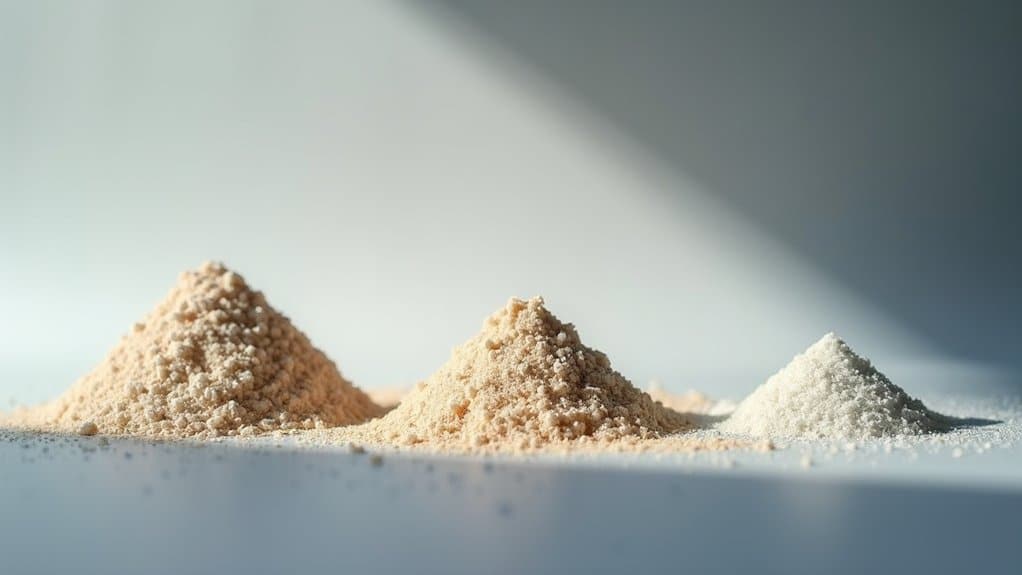
Psilocybin dosages fall into three primary classifications based on their pharmacological effects and subjective intensity. Understanding these thresholds helps you calibrate your approach to psilocybin research or therapeutic applications.
A microdose typically ranges from 100-300 mg of dried psilocybin mushrooms, delivering sub-perceptual effects without hallucinations or cognitive impairment. You’ll experience subtle enhancements in mood and creativity rather than overt psychoactive responses. If any psychedelic effects are felt, the dosage should be dialed back accordingly.
A standard dose contains approximately 20-30 mg of psilocybin, equivalent to 1.75-2.5 g of dried mushrooms at 1% psilocybin content. This range produces moderate perceptual alterations and emotional shifts. A typical hallucinogenic dose of psilocybin is about 2.5 g of dried mushrooms, placing it at the upper end of this standard range.
A high dose exceeds 30 mg psilocybin, with 3.5 g dried mushrooms delivering approximately 35 mg. You’ll encounter significant perceptual distortions, cognitive changes, and potentially mystical experiences at these concentrations.
How Many Grams of Mushrooms Equal Each Psilocybin Dose?
When you’re working with dried psilocybin mushrooms, understanding the conversion between grams and milligrams of psilocybin is essential for achieving your target dose. Psilocybin content in *Psilocybe cubensis* typically averages around 1% of dried weight, meaning 1 gram of dried material contains approximately 10mg of psilocybin, though this concentration varies markedly by species, strain, and even individual mushroom parts. You’ll find that without laboratory analysis, calculating precise psilocybin content from dried mushroom weight remains an approximation rather than an exact science. For those new to psilocybin, a 1.2mg microdose provides a gentle introduction that allows for gradual exploration of the substance’s effects. A typical microdose falls within 0.1 to 0.3 grams of dried mushrooms, representing approximately 5-10% of a standard psychoactive dose designed to remain below the threshold of perceptual changes.
Dried Mushroom Equivalents
How do dried mushroom weights translate to actual psilocybin doses? When you’re working with Psilocybe cubensis, the standard reference species, you’ll find consistent correlations between mass and alkaloid content.
- Threshold effects: 0.5g, 1.0g dried Psilocybe cubensis delivers approximately 5-10mg psilocybin
- Moderate experiences: 2.0g, 3.5g dried Psilocybe cubensis yields 20-35mg psilocybin with maintained cognition
- High-intensity sessions: 3.5g, 5.0g dried Psilocybe cubensis produces 35-50mg psilocybin and potential ego dissolution
- Heroic territory: 5.0g+ generates 50mg+ psilocybin under controlled conditions
You should note that potency varies between specimens, growing conditions, and storage methods. Research indicates dried cubensis contains roughly 0.63% psilocybin by weight, though individual mushrooms fluctuate noticeably. Psilocybin content across species can range from 0.03% to 1.78% of dried weight, making accurate dosing calculations essential. Always account for this variability when calculating your target dose. For comparison, Liberty caps or Psilocybe semilanceata tend to have higher potency than cubensis, which means equivalent doses would require less material.
Psilocybin Content Variations
Understanding dried mushroom equivalents provides a useful framework, yet these calculations rest on a critical assumption: consistent psilocybin content. In reality, you’ll encounter significant variability across species, strains, and individual specimens.
Psilocybe cubensis typically contains 0.5% to 1% psilocybin by dried weight, averaging 10-12mg per gram. However, tested samples range from 600mcg to 24,600mcg per gram, a 40-fold potency difference. This means 2 grams of shrooms from one batch might deliver substantially different effects than another. Even mushrooms of the same strain grown within the same grow enclosure can vary in potency by up to 100%, potentially meaning the difference between a perfect dose and an unintentional overdose.
Species selection dramatically impacts dosing. Psilocybe azurescens reaches 1.8% psilocybin content, while truffles contain only 0.2-0.7%. A 5 gram shroom trip using average cubensis differs markedly from equivalent weights of potent strains like Penis Envy. Caps generally concentrate higher alkaloid levels than stems, adding another variable to your calculations. For beginners navigating this variability, starting with predictable strains like Golden Teacher or B+ offers more consistent experiences before exploring higher-potency options.
Why Your Body Weight Doesn’t Change Your Psilocybin Experience
You might assume that your body weight determines how much psilocybin you need, but clinical research involving 288 participants across ten Johns Hopkins studies found no significant correlation between weight and subjective effects. Fixed dosing protocols using 25 mg have proven equally effective across individuals ranging from 49 to 113 kg, debunking the common weight-adjustment myth. Your metabolic processes and 5-HT2A receptor sensitivity play far more significant roles in determining your experience intensity than your mass alone. This research supports the growing consensus that fixed dosing approaches offer practical advantages including convenience and lower cost for psilocybin-assisted therapy implementation. Importantly, the study found that mystical-type experiences and emotional breakthroughs were strong predictors of improvements in well-being two weeks later, rather than BMI.
Fixed Dosing Works Best
When researchers examined psilocybin’s effects across participants weighing 49 to 113 kg, they found no notable associations between body weight and subjective drug experiences. Whether you’re considering 1 gram of shrooms or wondering is 1.5 grams of shrooms a lot, your body weight won’t markedly alter the pharmacodynamic response.
Clinical trials demonstrate fixed 25 mg doses yield consistent outcomes:
- Comparable psilocin plasma concentrations across a 1.7-fold weight range
- No enhanced effects in lighter individuals versus heavier participants
- Similar AUC and Cmax exposures to weight-adjusted 0.3 mg/kg protocols
- Successful therapeutic outcomes in treatment-resistant depression studies
This evidence supports fixed dosing protocols for standardized research. When planning a 2g shroom trip, you can expect relatively consistent intensity regardless of whether you weigh 54 kg or 94 kg. The research analyzed ten studies totaling 288 participants at Johns Hopkins University, providing robust data across diverse body compositions. Meta-analysis of psilocybin trials demonstrated a large effect size favoring the treatment, with both short-term and long-term antidepressant benefits observed across participants.
Research Debunks Weight Myths
The persistent belief that heavier individuals require larger psilocybin doses doesn’t hold up under scientific scrutiny. Analysis of 288 participants across ten Johns Hopkins studies revealed no significant associations between body weight and subjective effects. Participants weighing 49 to 113 kg, a 2.3-fold range, reported equivalent mystical, challenging, and intensity experiences at standardized doses.
You’ll find that BMI fails as a predictor of acute psilocybin experience intensity across dose ranges of 115-315 μg/kg. Post hoc analyses incorporating body weight and BMI into statistical models produced no substantive differences. Interestingly, preclinical research has shown that a single dose of psilocybin actually increased body weight in mice, suggesting the substance may influence metabolism independently of dosing considerations. These metabolic changes were accompanied by increased lean and water mass in the treated animals.
This research suggests body weight doesn’t adequately capture the physiological variables influencing psilocybin’s subjective effects. Your weight simply isn’t the determining factor you might assume, individual neurochemistry and set and setting play far more consequential roles.
Metabolism Matters More
Moving beyond body weight as a dosing variable, metabolic rate emerges as a more compelling, yet equally unsupported, candidate for predicting psilocybin sensitivity.
Calorimetric studies reveal surprising findings:
- Oxygen consumption and carbon dioxide output remain identical between psilocybin-treated and control groups
- Respiratory gas exchange shows no alterations even after 19 weeks of chronic administration
- Energy expenditure stays constant despite significant feeding behavior modifications
- Metabolic enzyme changes (creatine kinase, aspartate aminotransferase) occur independently of weight fluctuations
You might assume faster metabolism would accelerate psilocybin processing, reducing intensity. Research contradicts this hypothesis. Your body’s energy expenditure doesn’t correlate with subjective effects or behavioral responses. Whether you’re metabolically efficient or inefficient, psilocybin’s neurobiological actions proceed through receptor-mediated pathways that bypass traditional metabolic considerations entirely. Studies in mice demonstrated that psilocybin treatment impacted meal size and frequency without corresponding changes in overall metabolic rate.
Why 25 Mg Is the Standard Psilocybin Dose in Clinical Trials
You’ll find this dose represents a calculated compromise, it’s sufficient to induce mystical-type experiences while minimizing adverse reactions. In major depressive disorder trials, single 25 mg administrations produced clinically relevant MADRS score reductions of 12-13 points at three weeks. Two-dose protocols spaced two to three weeks apart demonstrated 71% response rates.
The 25 mg standard offers favorable tolerability with psychological support, producing fewer adverse events than repeated higher doses while maintaining large, sustained effect sizes.
What Each Psilocybin Dose Does to Your Brain and Blood
Psilocybin’s conversion to psilocin initiates a cascade of neurobiological changes that researchers can now track across brain networks and metabolic pathways. Once metabolized, psilocin remains active for approximately six hours, during which your brain undergoes measurable alterations.
Your default mode network experiences the most significant functional connectivity disruption, over three times greater than methylphenidate controls. This desynchronization correlates directly with subjective psychedelic intensity.
Key neurobiological changes you’ll experience include:
- Increased cerebral glucose metabolism in your putamen, anterior cingulate cortex, and temporal cortex
- Reduced network segregation, blurring distinctions between previously distinct brain regions
- Enhanced thalamus-cortex feedback loops mediating perceptual alterations
- Decreased executive control network connectivity (Cohen’s d = −1.73) persisting one week post-dose
These modifications demonstrate dose-dependent patterns, with higher doses producing more pronounced desegregation across cortical and subcortical structures.
Psilocybin Timeline: Onset, Peak, and Comedown by Dose
Because psilocybin undergoes hepatic dephosphorylation before crossing the blood-brain barrier, you won’t feel effects immediately, onset typically occurs 20-40 minutes post-ingestion, though this window extends to 1.5 hours depending on gastric contents, individual metabolism, and dose magnitude.
Because psilocybin undergoes hepatic dephosphorylation before crossing the blood, brain barrier, effects are not felt immediately, onset typically occurs 20, 40 minutes post-ingestion, though this window can extend to up to 1.5 hours depending on gastric contents, individual metabolism, and dose magnitude. This variability largely explains common questions around how long psilocybin takes to kick in, as physiological and contextual factors strongly influence initial perception of effects.
| Parameter | Low Dose | Moderate-High Dose |
|---|---|---|
| Peak Onset | ~2 hours | 60-90 minutes |
| Total Duration | 3-6 hours | 4-6+ hours |
| Intensity | Mild perceptual shifts | Pronounced sensory alterations |
Psilocin plasma concentrations peak approximately 120 minutes after a 25 mg dose, correlating with maximal subjective effects. You’ll experience the most intense visuals and introspection during this 1.5-3 hour peak window. The comedown phase begins around hour four, with acute effects resolving within 6-7 hours. Psilocin’s half-life of 1.5-4 hours guarantees complete clearance same-day.
The Ceiling Effect: When Higher Psilocybin Doses Stop Working
Understanding the temporal dynamics of psilocybin’s effects raises a critical question: does escalating the dose proportionally intensify the experience? Research demonstrates a pharmacological ceiling effect, where subjective responses plateau despite increasing psilocin plasma concentrations. As researchers delve deeper, they are uncovering nuances in the duration of psilocybin experiences that could influence therapeutic applications. Understanding how long these experiences last and the factors that shape their intensity can provide invaluable insights for mental health treatment.
Studies comparing 0.30 mg/kg, 0.45 mg/kg, and 0.60 mg/kg psilocybin reveal:
- No significant difference in complete mystical experience rates across doses (33.3%, 45.5%, 30.0%)
- Pharmacokinetic parameters (AUC, Cmax) increased linearly without corresponding subjective gains
- Only the transcendence of time and space subscale showed dose-dependent sensitivity
- Positive persisting effects occurred independent of peak intensity
You’ll find that higher doses don’t guarantee enhanced therapeutic outcomes. The disconnect between pharmacokinetics and subjective experience suggests receptor saturation occurs at moderate doses. This ceiling effect indicates optimized protocols needn’t pursue maximum dosing to achieve clinical benefits.
How Dose Escalation Works in Psilocybin Research
Dose escalation protocols in psilocybin research follow a systematic approach designed to characterize pharmacokinetic and pharmacodynamic relationships across increasing concentrations. You’ll find researchers administer escalating oral doses at minimum four-week intervals, progressing sequentially from 0.3 mg/kg to 0.45 mg/kg to 0.6 mg/kg.
Dose escalation protocols in psilocybin research follow a systematic approach designed to characterize pharmacokinetic and pharmacodynamic relationships across increasing concentrations. Researchers typically administer escalating oral doses at minimum four-week intervals, progressing sequentially from 0.3 mg/kg to 0.45 mg/kg and then to 0.6 mg/kg. This staged design also accounts for variability in how Different psilocybin products take to work, ensuring that onset timing and peak effects are clearly distinguished across formulations and dose levels.
| Parameter | Finding | Clinical Implication |
|---|---|---|
| Pharmacokinetic linearity | Confirmed within 0.3-0.6 mg/kg range | Predictable exposure scaling |
| Psilocin elimination half-life | 3 hours (SD 1.1 hours) | 8-hour monitoring sufficient |
| Fixed dose equivalence | 25 mg ≈ 0.3 mg/kg exposure | Standardization across trials |
You’re monitored for eight hours per session with blood and urine samples collected over 24 hours post-dose. Research demonstrates no serious adverse events occurred up to 30 days post-administration at 0.6 mg/kg, supporting continued investigation of supratherapeutic ranges.
Why a Single Psilocybin Dose Can Improve Mood for 30 Days
When researchers administer a single 25 mg dose of synthetic psilocybin, they’ve observed depressive symptom reductions that persist for weeks to months, far outlasting the compound’s 3-hour elimination half-life.
This sustained antidepressant response stems from psilocybin’s mechanism of action on serotonin receptors 5-HT2A and 5-HT1A, which triggers neuroplastic changes rather than merely modifying neurotransmitter levels.
Clinical evidence demonstrates:
- Rapid remission at 3 weeks sustained through 12 weeks in treatment-resistant depression trials
- MADRS scale improvements from day 2 through week 3 with 25 mg versus lower doses
- Anxiety and depression reductions at 3 and 6 months in oncology patients
- Continuing positive personality and well-being changes post-administration
You’re fundamentally experiencing a recalibration of neural circuits that outlasts the acute pharmacological effects, explaining why single-dose protocols show therapeutic viability.
Stay Informed and Stay Supported Your Aftercare Team Is Here
If psilocybin use is part of a broader pattern of substance use that has become hard to manage, speaking with a treatment specialist is a good next step. Quest 2 Recovery’s drug rehab in Lancaster, CA offers confidential residential treatment for co-occurring substance use. Call (855) 783-7888.
Frequently Asked Questions
Can I Take Psilocybin Safely if I’m Currently on Antidepressant Medications?
You can likely take psilocybin while on antidepressants with relatively low physical risk. Research shows no confirmed serotonin syndrome cases, and studies demonstrate favorable safety profiles when combining psilocybin with SSRIs or SNRIs. However, you’ll probably experience attenuated psychedelic effects due to cross-tolerance at serotonin receptors. You should consult your healthcare provider before proceeding, as they can assess your specific medication regimen and determine whether gradual tapering might optimize therapeutic outcomes.
How Long Should I Wait Between Psilocybin Sessions to Avoid Tolerance Buildup?
You should wait at least seven days between psilocybin sessions to avoid tolerance buildup. Research demonstrates that daily or every-other-day administration of serotonergic psychedelics produces rapid, progressive tolerance that becomes insurmountable within four days. However, studies consistently show no tolerance development when dosing occurs at weekly intervals. This seven-day minimum allows your 5-HT2A receptors to fully resensitize, ensuring you’ll experience the compound’s full pharmacological effects during subsequent sessions.
Does Psilocybin Interact With Other Recreational Substances Like Cannabis or Alcohol?
Yes, psilocybin interacts markedly with both substances. When you combine it with alcohol, you’ll experience amplified impairment, masked intoxication levels, and synergistic sedative effects that can cause respiratory depression. Research indicates over 10% of users report their worst experiences involve this combination. Cannabis co-administration occurs in nearly 60% of psilocybin users, though clinical data remains limited. You may experience unpredictable cardiovascular effects and intensified psychological responses with either combination.
Are Psilocybin Effects Different for People With Kidney or Liver Conditions?
Yes, psilocybin affects you differently if you have kidney or liver conditions. Your liver metabolizes approximately 80% of psilocin via UGT 1A10 and UGT 1A9 glucuronidation pathways, so hepatic dysfunction alters drug sensitivity. While renally cleared metabolites are inactive, compromised kidneys face increased workload during excretion. You’ll want to avoid psilocybin entirely with stage 4, 5 renal failure or dialysis. Consult a nephrologist and psychedelic-trained clinician before any use.
What Should I Do if I Experience a Difficult or Overwhelming Psilocybin Trip?
You should immediately relocate to a calm, dimly lit environment and practice 4-7-8 breathing techniques. Drink water, engage with calming stimuli, and repeat reassurance mantras like “This too shall pass.” Grounding techniques, focusing on breath or tactile objects, help stabilize your neurological state. A trusted trip sitter can provide critical support. Research indicates benzodiazepines may attenuate acute distress under clinical supervision. Post-experience, prioritize rest and integration through journaling or professional consultation.