






After administering naloxone for an opioid overdose, check responsiveness and breathing first. Then, roll the person onto their side with their top leg bent at a 90-degree angle for stability, keeping their spine straight. Finally, tilt their head back slightly to maintain an open airway while avoiding neck hyperextension. You’ll need to monitor breathing continuously and reposition every 15-30 minutes. Understanding additional critical signs and monitoring techniques can enhance your emergency response preparedness.
Essential Pre-Positioning Safety Checks

Before initiating the recovery position for an opioid overdose victim, you must perform critical safety assessments to guarantee appropriate intervention. Start with a responsiveness assessment by calling their name and applying firm sternum stimulation with your knuckles. Check their breathing pattern and look for blue-tinted lips or skin that may indicate oxygen deprivation. If unresponsive and breathing is impaired, call 911 immediately.
Ensure environmental awareness by scanning the immediate area for hazards like sharp objects or fall risks. Don’t move the person if they’re in a precarious position without first securing the space. Check their pulse and circulation while maintaining airway alignment. If you notice irregular breathing or gasping, prepare to administer emergency care. Remember, you’ll need quick access to naloxone and a clear path for emergency responders, so organize the surrounding area accordingly.
Proper Side-Recovery Position Technique
When placing someone in the recovery position after an opioid overdose, proper technique is essential for maintaining airway patency and preventing aspiration.
Roll the person completely onto their side, ensuring straight spinal alignment. Position their upper leg at a 90-degree angle for stability. Tilt their head back slightly to maintain airway alignment while avoiding neck hyperextension. You’ll need to clear any obstructions from their mouth and keep their face unobstructed. After administering naloxone, check for breathing restoration quickly.
Monitor their positioning continuously, as they may drift onto their back or stomach. If this occurs, immediately restore proper side positioning. Once spontaneous breathing resumes, maintain this position until emergency responders arrive. Remember that after naloxone administration, you’ll need to stay vigilant for potential respiratory depression relapse and prepare for possible redosing.
Ongoing Monitoring and Position Maintenance
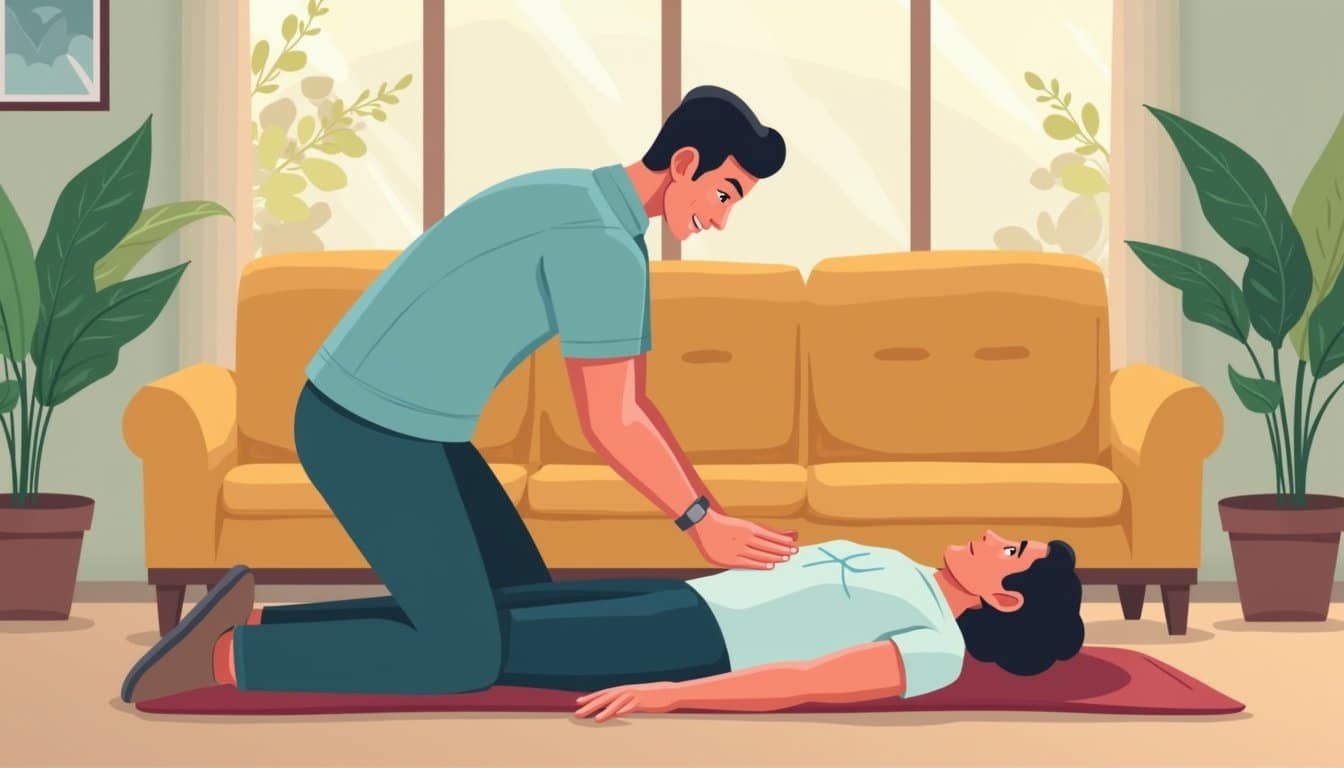
Proper monitoring remains essential after placing someone in the recovery position during an opioid overdose. Pay close attention to breathing patterns and maintain continuous assessment of critical signs. Watch for death rattle sounds or gurgling, which indicate severe respiratory distress. Rub knuckles on the breastbone or upper lip to check responsiveness if the person becomes less alert. Have naloxone readily available while monitoring the person, as additional doses may be needed if symptoms return.
- Monitor breathing rate, aim for more than 8 breaths per minute
- Check skin color regularly for a blue tinge or ashiness
- Stimulate the person to maintain consciousness
- Listen for abnormal breathing sounds or gurgling
- Adjust position if breathing becomes labored
Continue monitoring until emergency medical services arrive. Reposition every 15-30 minutes to guarantee airways remain clear and breathing stays stable. Watch for signs of deterioration that may require immediate medical intervention.
Frequently Asked Questions
How Long Should Someone Stay in the Recovery Position After Naloxone Administration?
You should maintain the recovery position until spontaneous breathing resumes, monitoring patients for 30-90 minutes as naloxone effects wear off. If you’re in an urban area, keep them positioned until EMS arrives (typically 15 minutes). For rural settings, you’ll need to maintain positioning longer (30+ minutes). Stay with the person for at least 3 hours if hospital care isn’t available, as rebound overdose is possible.
Can the Recovery Position Be Used for Pregnant Overdose Victims?
While the recovery position can be used for pregnant overdose victims, you’ll need to take into account some pregnancy-specific modifications. Due to potential vena cava compression in late pregnancy, it’s essential to guarantee the patient is tilted slightly to their left side to maintain proper blood flow for both maternal and fetal health. However, your primary focus should remain on administering naloxone and maintaining the airway, as these interventions are vital for both mother and baby’s survival.
What if the Person Is Too Heavy to Move Into Position?
If you can’t safely move someone due to their weight, don’t attempt the recovery position alone. Instead, focus on alternative positions where they are. Keep their airway clear by slightly elevating their head with available objects under their shoulders. If they’re lying flat, you can manually open their mouth to check for obstructions. Always prioritize your safety; don’t risk injury attempting assistance techniques beyond your physical capability.
Should Recovery Position Change if Person Has Physical Disabilities or Injuries?
Yes, you’ll need to use adjusted techniques based on an individual assessment of disabilities or injuries. For spinal injuries, minimize neck and back movement while maintaining airway clearance. If someone has mobility limitations, consider an upright seated position with pillow support. Don’t twist limbs with joint conditions or implants. Always prioritize breathing while adapting the position to accommodate medical devices, braces, or pre-existing conditions.
Is Recovery Position Different for Elderly Versus Younger Overdose Victims?
While the basic recovery position remains the same, you’ll need to take into account age-related factors when positioning elderly overdose victims. You should be extra cautious about joint mobility and bone fragility. Support their neck and spine more carefully, and avoid sudden movements. Watch for breathing complications due to age-related respiratory issues. You’ll also need to monitor them more closely as elderly patients often have multiple health conditions and medications that can complicate recovery.