






Your THC saliva test detection time window depends primarily on usage frequency and dosage. Occasional users typically clear THC within 24-72 hours, while heavy users may test positive for 30+ days due to metabolite accumulation in fatty tissues. Standard saliva tests achieve 90-98% accuracy, though factors like hydration levels, metabolism rate, and recent food consumption can affect results. Understanding how CYP450 enzyme activity and body composition influence clearance will help you better interpret your specific situation.
Detection Windows for Occasional THC Users
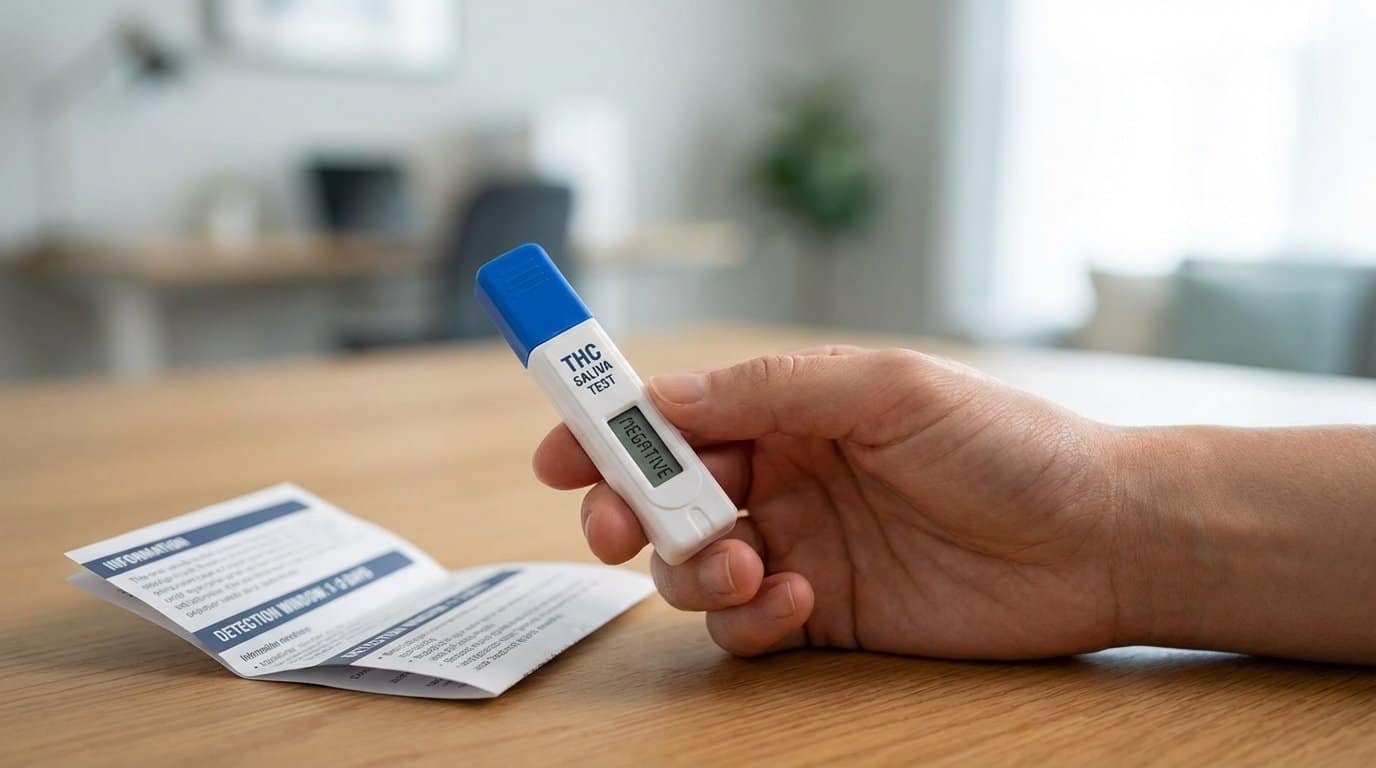
When you’re an occasional THC user facing a saliva test, understanding your detection window is critical for accurate expectations. Research indicates THC remains detectable in saliva for 24-72 hours post-consumption, with a median last detection time of approximately 12 hours. Controlled studies demonstrate detection extending up to 30 hours in some cases. It’s important to note that various factors, such as individual metabolism and the frequency of use, can influence these drug detection times in saliva. Additionally, hydration levels and the method of consumption may also play a role in how long THC can be detected.
Peak THC concentration in saliva occurs immediately after smoking, then declines rapidly. Several factors influencing oral THC detection determine your specific window: metabolism rate, dosage potency, hydration levels, and saliva flow rate all impact clearance speed. First-time users typically test positive for approximately three days following single use, while those who’ve cleaned their oral cavity may show shorter windows of 8-12 hours. Individual variation remains significant across all estimates. This testing method is particularly valued because it provides quick results, often delivering findings within minutes of sample collection. Testing positive for THC can lead to serious consequences, including job loss or denied employment, making it essential to understand your detection timeline before any workplace screening.
Detection Windows for Regular and Heavy THC Users
Regular and heavy THC users face considerably longer detection windows than their occasional counterparts, with saliva tests identifying cannabinoids for 1-7 days or more depending on consumption patterns. You’ll find that regular users typically test positive within a 24-72 hour window, extending to 5-7 days with a 39% positive rate. Heavy users demonstrate detection up to 30+ days due to THC accumulation in fatty tissues.
The variability in detection windows stems from multiple physiological factors. Your metabolism, body fat percentage, hydration levels, and saliva pH directly influence clearance rates. Heavy users show 77% positive test rates, reflecting THCCOOH metabolite buildup. It’s worth noting that washing the mouth, eating, or drinking can remove THC and potentially lead to a negative result despite recent use. THC gets sequestered in the oral mucosa and gradually releases into saliva after cannabis consumption.
Several factors affecting detection accuracy include test sensitivity, consumption frequency, and THC potency. Modern devices achieve 94% overall accuracy, though individual biological variations create significant result differences.
How Frequency and Dosage Affect THC Detection Times
The relationship between THC consumption frequency and detection windows follows predictable pharmacokinetic patterns that directly impact saliva test outcomes. When you consume cannabis regularly, THC accumulates in oral tissues, creating elevated baseline concentrations that extend detection periods. This accumulation can lead to longer thc detection time in mouth swabs, as trace amounts of THC can linger even after the psychoactive effects have subsided. Additionally, factors such as individual metabolism, frequency of use, and the potency of the cannabis consumed can further influence these detection windows, making it essential for users to understand their unique circumstances. Understanding how long marijuana stays in saliva can help users make informed decisions, especially when facing potential drug testing. Moreover, since saliva tests are common for both employment and legal situations, awareness of individual factors is crucial in navigating the consequences of cannabis use.
Your consumption patterns create measurable thc concentration impacts on test results. Heavy users demonstrate 77% positive test rates compared to occasional users at 86% accuracy within shorter windows. This reduced accuracy compared to other testing methods means saliva tests can produce false positives or negatives that affect result reliability.
| Factor | Detection Impact |
|---|---|
| Low-dose cigarette | 1-5 day mean detection |
| High-dose cigarette | 3-6 day mean detection |
| 3-4x weekly use | 5-7 day positive window |
| Single use | Up to 3 days detectable |
Thc dosage variations directly correlate with clearance rates, higher potency products prolong saliva presence through increased metabolite accumulation.
The Role of Metabolism and Hydration in THC Clearance
Beyond consumption patterns, your body’s internal biochemistry determines how quickly THC clears from oral fluid. Your liver’s CYP450 enzymes, specifically CYP2C9, CYP3A4, and CYP2C19, metabolize THC at rates influenced by individual genetic differences. These enzymatic variations directly impact detection windows.
Three critical physiological factors affect your THC clearance rate:
- Body composition: Higher body fat percentage sequesters THC in adipose tissue, releasing it gradually into saliva and extending detection beyond 30 hours. Because THC is fat-soluble, it can be stored in fat cells and gradually released back into the bloodstream over time.
- Hydration status: Adequate fluid intake dilutes saliva concentrations and accelerates oral fluid turnover. Conversely, dehydration can increase THC concentrations in the body, potentially affecting test results.
- Saliva pH variations: Lower pH environments stabilize THC in oral fluid, while higher flow rates dilute concentrations below detection thresholds.
Since 99% of THC binds to plasma proteins, free THC clearance occurs slowly, prolonging detectability.
THC Saliva Test Accuracy and Reliability Factors
While saliva drug tests offer convenience for detecting recent THC use, their accuracy depends on multiple interconnected variables that affect result reliability. Standard saliva tests achieve 90-98% accuracy, though THC-specific devices like the DT5000 record 10% false positives and 9% false negatives. Specificity rates range from 0.93 to 1.00 across testing platforms.
You should understand that food and beverage contamination substantially compromises test integrity. Citric acid from candy reduces THC concentrations two- to six-fold, while mouthwash products risk producing false results. Improper specimen storage conditions degrade sample quality, affecting reliability.
Collection technique matters considerably. Inadequate cheek or tongue swabbing yields unreliable specimens. Mass spectrometry confirmation provides precision verification, reducing false results when initial screening produces questionable outcomes. Biological differences between individuals also impact results, as these tests typically have a detection window of 5 to 48 hours after substance use. While saliva tests effectively detect THC, detecting synthetic drugs like fentanyl proves challenging due to their complex chemical composition and the lack of FDA-approved screening methods for emerging substances.
Frequently Asked Questions
Can Mouthwash or Oral Hygiene Products Affect My THC Saliva Test Results?
Yes, mouthwash product interference can affect your THC saliva test results. Studies show that water rinses produce statistically significant lower THC concentrations, while products like Listerine and hydrogen peroxide may temporarily reduce detectable metabolite levels. However, saliva test contamination from these oral hygiene products won’t guarantee a negative result, research demonstrates maximum THC concentrations often remain three-fold higher than the 25 ng/mL cutoff despite mouthwash use.
How Long Should I Avoid Eating Before Taking a Saliva Test?
You should avoid eating or drinking for at least 10 minutes before your saliva test, though some protocols recommend a 2-hour abstinence period for ideal results. Avoiding food intake prevents contamination that can alter THC metabolite concentrations and cause false readings. Food residues dilute your sample and modify pH levels, compromising saliva sample quality. This abstinence guarantees the swab captures accurate THC detection within the 24-72 hour window.
Does Secondhand Marijuana Smoke Cause a Positive Saliva Test Result?
Secondhand smoke exposure typically won’t cause a positive saliva test under normal circumstances. Research shows passive marijuana consumption only produces detectable THC levels in extreme, unventilated conditions. Even then, you’ll test positive for approximately 30 minutes post-exposure before levels dissipate. In well-ventilated environments, your saliva won’t contain measurable cannabinoid concentrations. If you’ve experienced passive exposure, waiting one hour before testing virtually eliminates false positive risk.
What Happens if My Mouth Is Too Dry During the Swab Test?
If your mouth is too dry during the swab test, you’ll likely face test invalidation requiring re-collection. Insufficient saliva production prevents adequate specimen volume for accurate analysis, compromising result reliability. The dehydration impact on results includes altered saliva pH and flow rate variability, which affects THC concentration measurements. Technicians may instruct you to hydrate or use stimulation techniques before retesting. Lab-based protocols guarantee accuracy once sufficient sample volume is obtained.
Can Prescription Medications Interfere With THC Saliva Test Accuracy?
Yes, prescription medications can interfere with THC saliva test accuracy. Pantoprazole, ibuprofen, and efavirenz metabolites trigger false-positive cannabinoid readings through antibody cross-reactivity. Your prescription dosage amount directly influences interference likelihood, higher doses increase false-positive risk. The prescription medication half-life determines how long metabolites remain detectable in saliva, affecting cross-reactivity duration. You should disclose all medications to testing personnel, as laboratory confirmation testing effectively eliminates most prescription-related false positives.