






When a veteran comes home from residential addiction treatment, the family has already adapted: new roles, new routines, new ways of coping during the weeks they were away. Reintegration is not just the veteran’s adjustment. It is the whole family learning to fit back together, this time around a recovery that has to be protected. For many veterans the experience echoes coming home from deployment, except now PTSD, early sobriety, and rebuilt trust are all in play at once. This article covers the practical steps for the months after discharge. Veteran ptsd and addiction support is critical during this transitional period. Families should seek resources that provide guidance and understanding about the unique challenges faced by veterans.
Why Does Reintegration After Treatment Feel So Hard?

The family a veteran leaves behind during 30, 60, or 90 days of residential treatment does not freeze in time. A spouse takes over every decision, the bills, and the discipline. Children adjust to a parent’s absence, sometimes with relief if the months before treatment were chaotic. Routines shift to fill the space the veteran occupied.
Veterans know this pattern. It is deployment reintegration all over again: coming home to a household that learned to run without you, feeling like an outsider in your own home, and discovering that the habits that got you through, hypervigilance and tight emotional control then, substance use more recently, now stand between you and the people you love. Pew Research has found that close to half of post-9/11 veterans describe readjustment to civilian life as difficult; coming home from treatment compresses a similar adjustment into the most fragile stretch of recovery.
None of this is failure. It is what happens when everyone in the system adapted to survive a separation. The difference this time is that the stakes include sobriety: NIDA puts relapse rates for substance use disorders at 40 to 60 percent, and the early months at home are when most of that risk concentrates. A deliberate reintegration plan is relapse prevention.
How PTSD and Early Recovery Change a Veteran’s Home Life
Two adjustments run at once after discharge. PTSD symptoms, if present, do not end when treatment does: the nervous system stays in survival mode, producing irritability, disrupted sleep, and a need to control the environment. Layered on top is early recovery itself. Post-acute withdrawal symptoms (PAWS), including mood swings, low energy, sleep problems, and difficulty concentrating, can come and go for weeks or months after detox. Families who expect the person who left treatment to come home “fixed” are blindsided by both. Research published through the NIH has documented that spouses of veterans with PTSD frequently experience burnout and emotional exhaustion from the ongoing strain, which is why the family needs its own support, not just patience.
Emotional Withdrawal From Family
Emotional withdrawal in early recovery rarely looks like dramatic conflict. It looks like absence while present: shorter answers, avoided eye contact, a partner who is physically home but emotionally unreachable. Some of it is PTSD avoidance. Some of it is the awkwardness of being sober in rooms where every memory involves using, or shame about what happened before treatment.
The withdrawal lands differently on each family member:
| Family Member | Experience | Common Response |
|---|---|---|
| Spouse | Secondary trauma, compassion fatigue, guarded hope | Resentment, burnout, monitoring behavior |
| Children | Interpret silence as rejection, unsure if the change will last | Anxiety, acting out, keeping distance |
| Veteran | Emotional numbing, shame, cravings | Deeper isolation, relapse risk |
You cannot resolve what you do not name, and recognizing these patterns early is the first step toward reconnection. If isolation ever escalates toward suicidal thinking, contact the Veterans Crisis Line immediately: dial 988, then press 1.
Behavioral Changes At Home
PTSD and early recovery both reset the nervous system’s baseline, and neither stays contained inside the veteran. Sleep disruptions can force separate bedrooms. Hypervigilance turns shared spaces tense. Irritability that the treatment team would recognize as PAWS reads, at home, like the old pre-treatment behavior coming back, which frightens everyone.
These are symptoms, not character flaws and not necessarily relapse warnings. The home itself also matters now in a way it did not before: alcohol in the refrigerator, prescription medications in an unlocked cabinet, and old drinking buddies dropping by are environmental triggers the family can actually control. Clearing substances from the home before discharge, keeping routines predictable, and continuing professional support together turn the house from a triggering environment into a foundation for recovery.
Get Support Your Whole Family Can Access
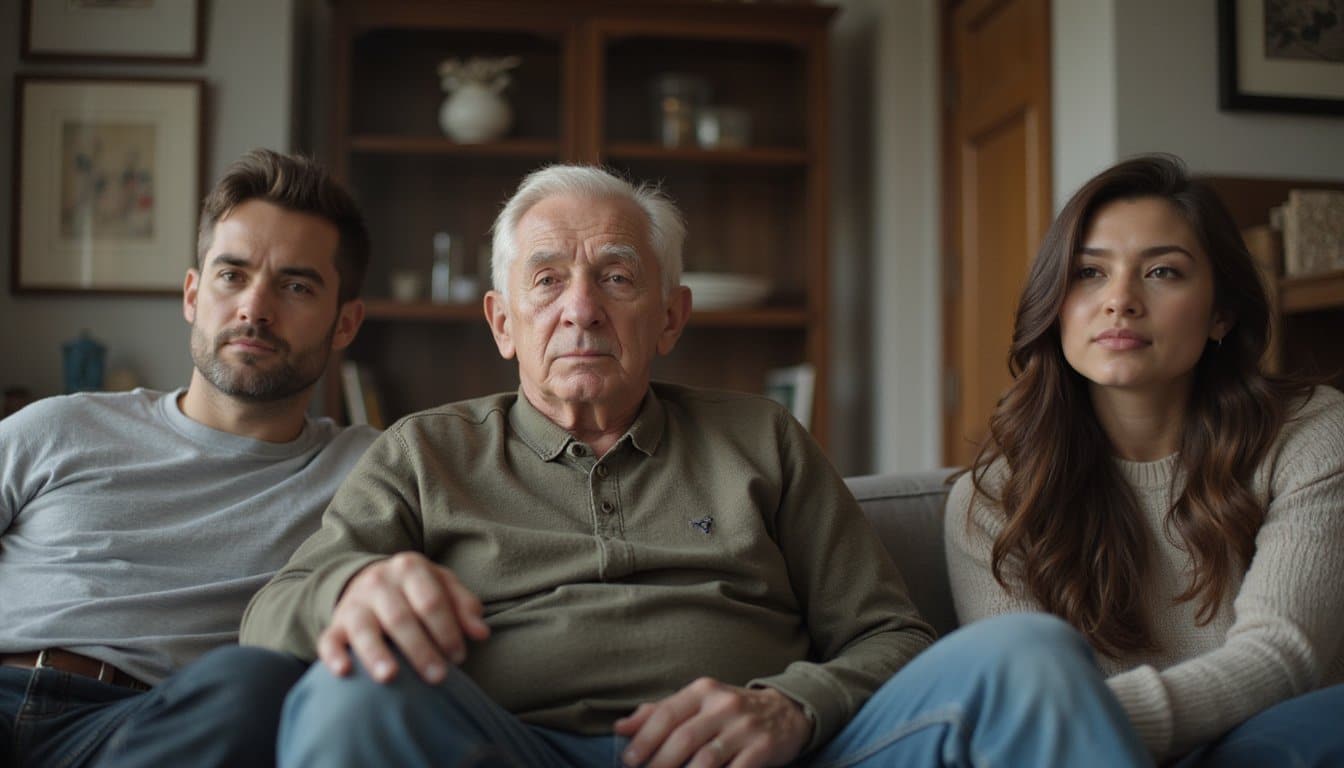
Reintegration after treatment reshapes the entire family system, which is why support should reach every member of the household, not just the veteran. Common patterns in the first months home:
- A spouse quietly managing everything alone, unsure how to share control again or whether to trust the change
- A child acting out at school, unable to name the tension they feel at home
- A veteran white-knuckling cravings in silence, struggling to reconnect with daily routines
Several resources serve the whole family. Vet Centers offer free counseling for veterans and their families, including readjustment counseling, without requiring VA health care enrollment. Military OneSource provides confidential non-medical counseling at no cost for those within eligibility windows. Al-Anon and Nar-Anon give spouses and adult family members their own recovery program, and Alateen serves teens. Family therapy, ideally continuing whatever family work began during treatment, keeps communication structured while trust rebuilds. You do not need a crisis to use any of these. Early support strengthens everyone’s adjustment.
Rebuild Family Roles and Routines After Treatment
The household your family built during your stay in treatment has its own rhythm, and stepping back into old roles without conversation creates friction for everyone. Redefining responsibilities together, rather than assuming things will revert, lets the family negotiate a structure that fits who everyone is now and protects the recovery. The adjustment takes months, not days.
Redefining Household Responsibilities
While you were in treatment, your family did not pause. Your spouse took on decision-making, budgeting, and discipline. Your children adapted. Redefining responsibilities means honoring those changes rather than overriding them, and it means being honest about capacity: early recovery consumes real energy, and overloading the first month home sets everyone up for disappointment.
- Start by assisting with small tasks, such as dishes or school pickups, and add responsibility gradually as stability proves itself.
- Route child-related decisions through your spouse at first, since they know the current routines, and earn the shared role back through consistency rather than claiming it.
- Hold weekly family check-ins to divide responsibilities and surface frustrations before they harden into resentment.
Shared routines rebuild trust the only way it rebuilds: through small, repeated, kept commitments. Structure creates stability for everyone, not just the veteran.
Establishing Recovery-Centered Routines
New routines after treatment are not about restoring what existed before. They are about building a daily structure that fits who everyone is now and has recovery built into it. Start with simple, predictable anchors: shared mealtimes, consistent sleep schedules, weekly family check-ins.
Then protect the recovery commitments inside that structure. Meeting attendance, outpatient or IOP sessions, therapy appointments, and medication schedules belong on the family calendar with the same standing as work and school, not squeezed in around them. When children help choose family activities and spouses collaborate on scheduling, ownership replaces resistance.
Build gradually and resist rushing major changes, including big decisions like moves or job changes, during the first months home. If expectations keep colliding, family therapy with a clinician experienced in both military culture and addiction provides structured guidance for finding where the conflicts are.
Use Aftercare Programs Early
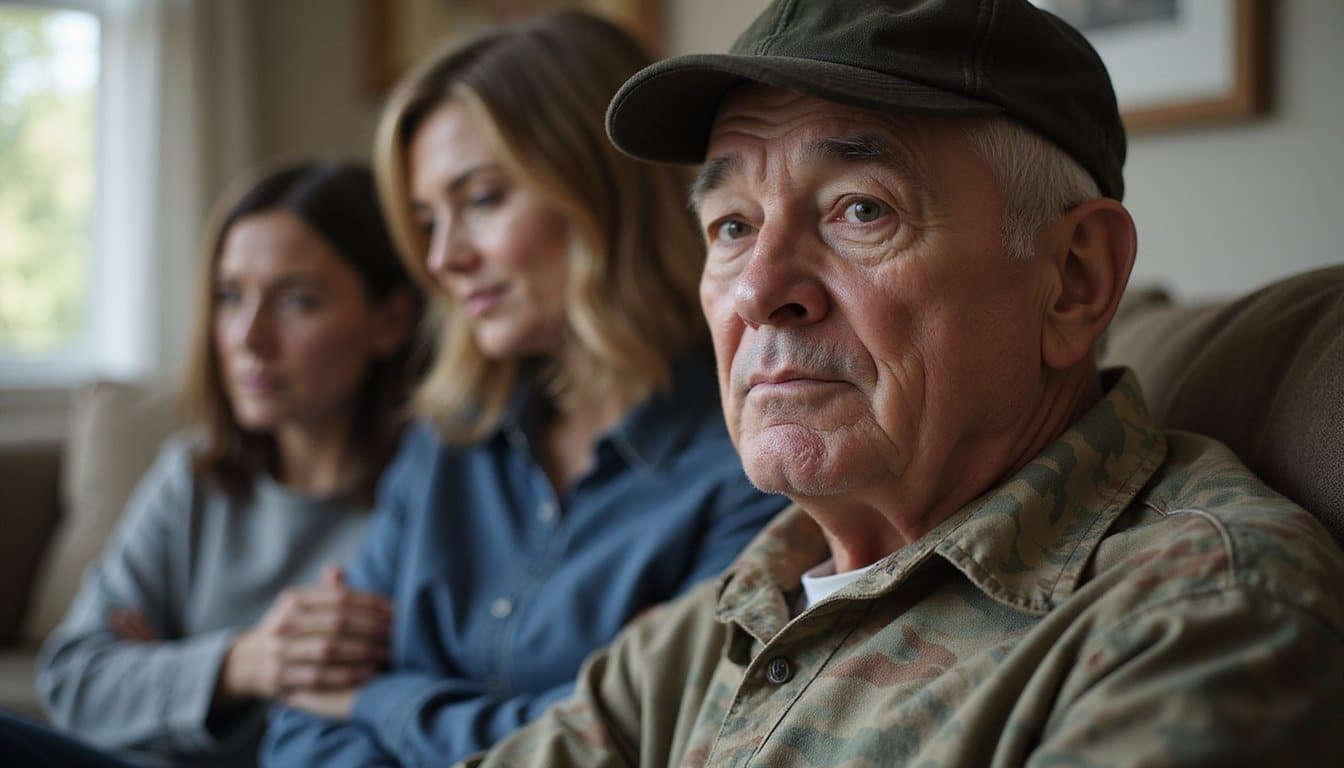
Discharge from residential treatment is a transfer of care, not an end of it. NIDA’s research-based principles note that treatment shorter than 90 days is of limited effectiveness for most people, which is why structured step-down care during reintegration matters so much. Build the aftercare plan with the treatment team before discharge day, not after:
- Step-down treatment: continuing care after residential, such as outpatient therapy sessions several times per week with evening options, lets the veteran live at home and return to work while treatment continues through the highest-risk months.
- Continued therapy and medication: ongoing trauma-focused therapy for PTSD, individual counseling, and medication-assisted treatment where prescribed should carry forward without a gap. TRICARE and most PPO plans cover continuing care, and the treatment program’s case manager coordinates the handoff.
- Alumni and sober living: the treatment program’s alumni community provides built-in peer accountability, and structured sober living is an option when the home environment is not yet stable enough to support early recovery.
Families should know the aftercare schedule, who the outpatient providers are, and what the relapse response plan says before the veteran walks in the door. Understanding veteran relapse risks is crucial for families to provide appropriate support. They should also familiarize themselves with resources available in the community to assist with potential challenges.
Build a Veteran Peer Network for Your Family
Isolation is one of the most common threats to a veteran’s recovery after treatment, and peer networks reduce it by connecting your family with people who have lived the same transition.
For the veteran, that means veteran-specific recovery meetings where the room understands both the addiction and the service, the treatment program’s alumni network, and Vet Center groups. For spouses, the Veteran Spouse Resiliency Group offers structured peer support, alongside Al-Anon and Nar-Anon. Caregivers can find mentoring through the Military Veteran Caregiver Network, and some counties run their own veteran peer programs through the county veterans service office.
You do not need to find everything through one door. Combine sources, and use peer check-ins between appointments to keep accountability steady. These connections carry recovery through the stretches when motivation dips.
Four Things Veteran Families Say They Need Most After Treatment
When families describe what they actually need in the months after a veteran’s treatment, four priorities surface repeatedly: continued mental health and addiction care, stable financial footing, structured communication with realistic expectations, and dedicated time to rebuild relationships and routines. Why veterans resist addiction treatment often stems from a lack of trust in traditional methods and a desire for more personalized care. Many veterans feel misunderstood and believe that their unique experiences are not adequately addressed in conventional programs.
In practice, that looks like a family in a counselor’s office learning to talk about what the addiction years did, a veteran and spouse reviewing the budget that strained under treatment costs and lost income, and a parent and child rebuilding a daily rhythm one school pickup at a time.
Each priority reinforces the others. Financial stability reduces the stress that fuels cravings. Continued treatment protects the foundation everything else stands on. Realistic communication keeps assumptions from hardening into resentment. Time together rebuilds what the addiction interrupted. These are foundations, not luxuries.
Honor Their Service With Specialized Care
Veterans carry experiences most people cannot fully understand, and lasting recovery depends on what happens after residential treatment ends. At Quest 2 Recovery in Quartz Hill, CA, our Veterans & Military Support program pairs residential treatment with personalized Aftercare planning so the transition home strengthens recovery instead of testing it. Call (855) 783-7888 to start building a stronger, healthier tomorrow.
Frequently Asked Questions
How Long Does Reintegration After Treatment Take for Most Families?
Typically several months to over a year, with wide variation. The first 90 days after discharge carry the highest relapse risk and the most role friction, and many families find tensions actually increase once the initial homecoming relief fades. Trust rebuilds on a slower clock than sobriety: expect one to two years of consistent behavior before it feels solid. That is not failure. It reflects how deeply addiction changed the family system, and it is a reason to keep aftercare and family support in place rather than declaring victory early.
Should Alcohol Be Removed From the Home When a Veteran Returns From Treatment?
Yes, at minimum for the early months, and ideally before discharge day so the veteran never comes home to it. Remove alcohol, secure or dispose of unused prescription medications, and ask the treatment team about anything substance-adjacent worth clearing. This is not about distrust. Environmental cues are among the strongest craving triggers in early recovery, and removing them is one of the few relapse-prevention steps entirely within the family’s control. Whether the household stays alcohol-free long term is a conversation to revisit with the treatment team as recovery stabilizes.
How Can Veteran Spouses Set Healthy Boundaries Without Guilt?
Start by identifying your own limits before responding to requests, then phrase boundaries specifically: “I need thirty minutes alone after dinner,” or “I’m not covering for missed obligations anymore.” Notice whether a yes comes from capacity or from guilt, and treat guilt as a feeling rather than evidence of wrongdoing. Clear boundaries protect your health and the recovery at the same time, since absorbed consequences are what enabled the addiction before. Al-Anon and spouse-specific peer groups exist precisely to help with this.
What Are the Warning Signs of Relapse Families Should Watch For After Treatment?
Relapse usually begins before any substance use: watch for skipped meetings or IOP sessions, reconnecting with old using contacts, romanticizing past use, secrecy about time and money, and isolation paired with rising irritability. Around significant military dates, such as deployment anniversaries or losses, expect elevated risk and plan extra support. Raise concerns early, calmly, and without accusation, and loop in the treatment team rather than monitoring alone.