

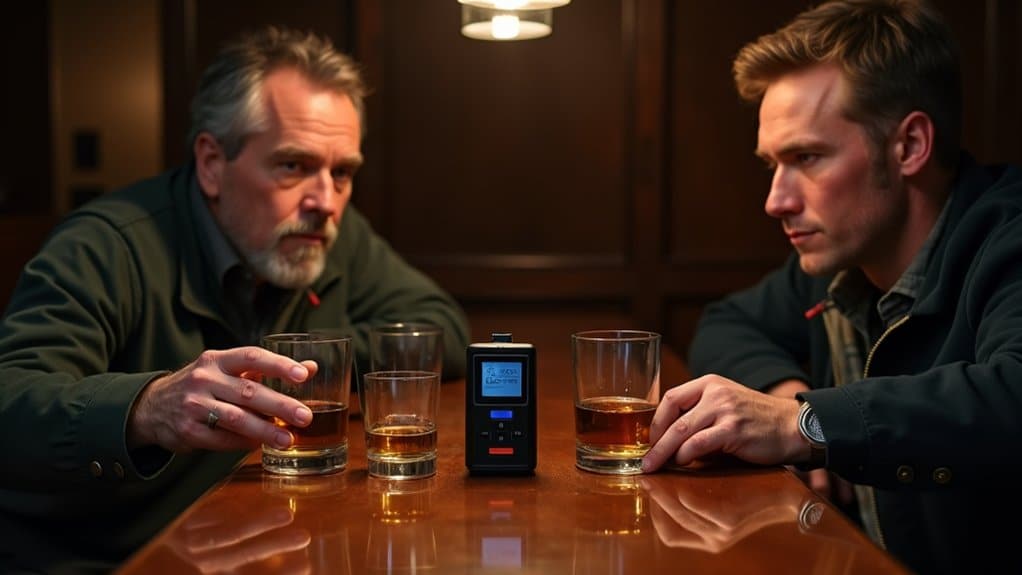




Alcohol tolerance changes how intoxicated you feel and look, but it doesn’t lower your BAC. Your blood alcohol keeps climbing with every drink, because how much and how fast you drink set it. Repeated exposure can mask visible signs, so your speech stays clear while your judgment, reaction time, and coordination remain impaired. That’s why feeling fine at 0.08 g/dL doesn’t mean you’re safe. Here’s what really sets your BAC and why the gap matters.
Key Takeaways
- Alcohol tolerance does not lower BAC; it only changes how intoxicated a person feels and appears.
- BAC depends mainly on how much and how fast you drink, plus body weight, food, sex, genetics, and fatigue.
- Tolerance can hide visible signs of intoxication while judgment, reaction time, and coordination remain impaired.
- A person with high tolerance may feel sober above 0.08 g/dL, which can lead to dangerous overconfidence.
- Crash risk depends on BAC, not tolerance, rising about fourfold at 0.08 g/dL and at least twelvefold at 0.15 g/dL.
Does alcohol tolerance affect BAC and intoxication

Alcohol tolerance affects how intoxicated you feel and look, but it doesn’t change what your blood alcohol concentration (BAC) measures. BAC quantifies alcohol in your bloodstream, not how impaired you seem, so tolerance does not directly affect it. As you drink more, your BAC still rises based on amount consumed, drinking speed, body weight, food, sex, health, fatigue, and genetics.
Tolerance does affect intoxication. Repeated exposure means you need more alcohol to feel the same effects, and it can reduce visible signs of intoxication at a given BAC. Tolerance masks impairment without removing it. Your judgment, reaction time, and coordination can remain impaired when you feel fine, and that masking encourages heavier drinking.
What is the difference between tolerance and BAC
BAC is the concentration of alcohol in your blood, while tolerance is your body’s adapted response to it. Tolerance changes how intoxicated you feel and look, not how much alcohol circulates in you.
Tolerance changes how drunk you feel and look, not how much alcohol is actually circulating in your blood.
Here is how tolerance and BAC can diverge:
- You finish five drinks in two hours, and your BAC climbs past 0.08 g/dL.
- You feel steady and speak clearly, so you seem sober.
- Your reaction time, judgment, and coordination stay impaired despite that calm exterior.
- Behind the wheel, your crash risk is about four times higher than at zero BAC.
Tolerance masks impairment and encourages you to drink more. Your sense of feeling “fine” can’t tell you your BAC or whether you’re fit to drive.
Can you have a high BAC but feel sober
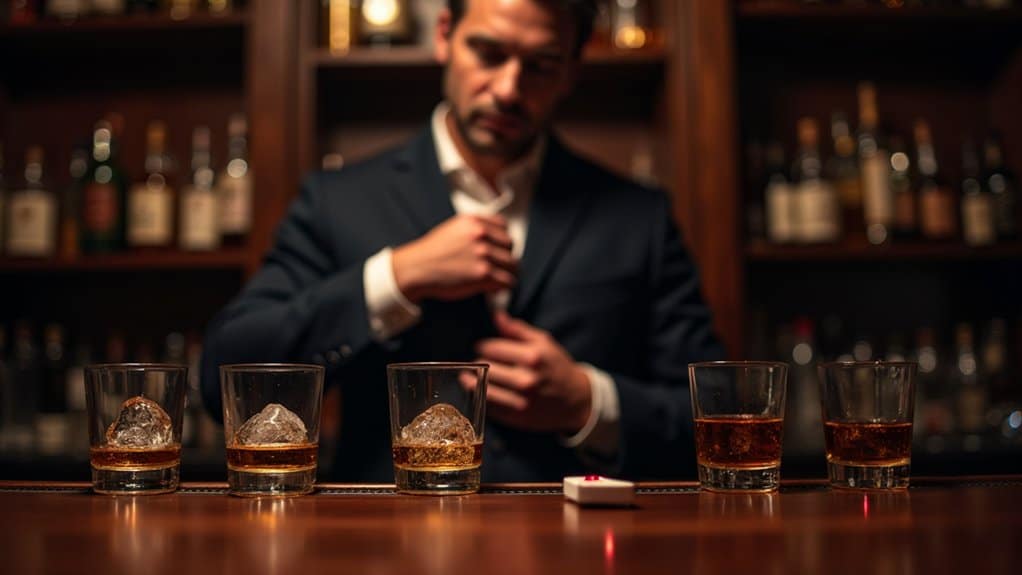
Yes, you can have a high BAC and still feel sober, because tolerance can leave you feeling unaffected while your BAC sits well above the 0.08 g/dL driving limit. Repeated drinking reduces the visible signs of intoxication, but it doesn’t lower the alcohol concentration in your blood. Your judgment, reaction time, and coordination can stay impaired even when you appear unaffected.
Acute tolerance can make you feel less intoxicated as your BAC falls than you did at the same level while it rose. That drop in perceived effects doesn’t mean your cognition has recovered.
NHTSA data show drivers at 0.08 g/dL are about four times more likely to crash than sober drivers. At 0.15 g/dL, the risk climbs at least twelvefold. Feeling “fine” can’t tell you your BAC or fitness to drive.
What actually determines your BAC
Your BAC is determined mainly by how much alcohol you drink and how fast you drink it. Drink quickly, and your BAC can climb sharply, producing significant impairment. Several other factors also shape how alcohol affects you:
- Body weight: You’re likely to reach a different BAC after the same drinks than someone who’s much lighter or heavier.
- Food intake: Whether you’ve eaten a full meal or are drinking on an empty stomach can affect alcohol’s impact.
- Sex and genetics: Biological differences mean your BAC and response won’t necessarily match a friend’s, even if you drink the same amount.
- Health and fatigue: Your overall health and how tired you are both affect alcohol’s impact.
Because these variables interact, counting drinks or judging how you feel can’t reliably tell you your BAC or whether you’re impaired.
How does this affect drunk driving risk

Tolerance doesn’t lower your drunk driving risk, because the crash risk tied to a given BAC stays the same. Tolerance can hide outward signs of intoxication, but alcohol still impairs the thinking, reasoning, and muscle coordination you need to drive safely. According to NHTSA, you’re about four times more likely to crash at 0.08 g/dL than at zero BAC, and at least 12 times more likely at 0.15 g/dL. Around 0.08 g/dL, alcohol can impair your balance, vision, reaction time, judgment, and memory.
Impairment can begin below that legal limit. Acute tolerance adds another hazard: as your BAC falls, you may feel less affected than you did at the same BAC while it was rising. Feeling “fine” doesn’t mean your reaction time or judgment has recovered. If you’ve been drinking, don’t drive.
Why can feeling sober be dangerous
Feeling sober can be dangerous because it tells you little about your actual impairment, since BAC measures alcohol in your blood rather than how intoxicated you feel. Tolerance can mask outward signs while alcohol disrupts your thinking, reasoning, and coordination. Consider the following:
- You’re steady on your feet after several drinks, yet your reaction time’s slowed enough to miss a braking car.
- You’ve stopped drinking and feel clearer as your BAC falls, but acute tolerance hides impairment that’s still present.
- You decide you’re “fine” to drive at 0.08 g/dL, where your crash risk is about four times higher.
- You keep drinking because you don’t feel drunk, pushing your BAC toward blackout or loss of consciousness.
Your subjective sense of being “fine” can’t measure BAC or confirm you’re safe to drive.
Why do tolerance and BAC not match
Tolerance and BAC don’t match because they track different things. BAC measures the alcohol in your blood. Tolerance changes how intoxicated you feel and look. With repeated drinking, your brain adapts, so you may seem steady while your BAC keeps climbing. Acute tolerance adds another gap. At the same BAC, you may feel less affected as levels fall than you did while they rose.
| What you notice | What’s actually happening | Risk |
|---|---|---|
| You feel fine | Your BAC may still be high | You misjudge fitness to drive |
| You look steady | Judgment and reaction time stay impaired | Others can’t spot danger |
| You need more drinks | BAC rises with each one | Blackouts, unconsciousness, death |
| You feel sober sooner | Alcohol hasn’t left your body | Crash risk stays dangerously increased |
How does Quest 2 Recovery address hidden drinking risks
Quest 2 Recovery addresses hidden drinking risks by treating the gap between feeling fine and drinking amounts that once left you visibly impaired as a clinical warning sign rather than evidence of control. Tolerance can mask impairment while your BAC keeps climbing, so your team evaluates what your drinking pattern reveals, not how you feel. Treatment focuses on:
- Mapping how much and how fast you drink, since rapid intake drives sharp BAC spikes.
- Identifying moments when you’ve driven or made decisions while feeling “fine.”
- Explaining why steady hands and clear speech don’t mean judgment or reaction time have recovered.
- Tracking escalating consumption, a pattern linked to blackouts, loss of consciousness, and overdose.
You replace subjective reassurance with objective data, then build strategies grounded in what alcohol actually does.
Feeling Fine to Drive Is Exactly When You’re Most at Risk
Tolerance keeps your speech clear and hands steady while your blood alcohol sits past the legal limit, and at 0.08 your crash risk is already four times higher. The calm isn’t recovery; it’s your warning signs off. If this much drinking feels normal, examine it. Quest 2 Recovery offers inpatient rehab that treats the pattern behind it. Verify your insurance or call (855) 783-7888 for a confidential conversation about recovery.
Frequently Asked Questions
Can Alcohol Tolerance Go Away if You Stop Drinking for a While?
Yes, tolerance generally declines when you stop drinking, because it develops through repeated alcohol exposure. The exact timeline varies with genetics, health, and prior drinking patterns. If you resume drinking at your old level, you’ll likely feel stronger effects. Remember, tolerance never lowered your BAC anyway: the same drinks still raise your BAC, impairing judgment, reaction time, and coordination. Don’t rely on feeling “fine” to judge driving fitness.
Does High Alcohol Tolerance Mean You Are Developing Alcohol Dependence?
Not necessarily, but you shouldn’t dismiss it. High tolerance shows your body has adapted to repeated alcohol exposure, so you need more alcohol to feel the same effects. Clinicians count tolerance as one possible sign of alcohol use disorder, not proof of it. Tolerance doesn’t lower your BAC or protect you; it masks impairment and encourages heavier drinking. If you’re noticing it, consider reassessing your intake or consulting a clinician.
Can Breathalyzers Be Inaccurate for People With High Alcohol Tolerance?
No, your tolerance doesn’t skew a breathalyzer, because the device estimates alcohol concentration, not how intoxicated you feel. Tolerance can reduce your visible signs of intoxication at a given BAC, but it doesn’t remove alcohol from your bloodstream. You can feel “fine” at 0.08 g/dL while your judgment, reaction time, and coordination remain impaired. At that level, NHTSA reports you’re roughly four times likelier to crash than at zero BAC.
Do Medications Affect Alcohol Tolerance or How BAC Is Processed?
Yes, some medications can change how alcohol affects you, but the source material here doesn’t detail specific drug interactions. It does list your health among factors influencing BAC, alongside amount consumed, drinking speed, body weight, food, sex, fatigue, and genetics. Don’t assume any medication raises your tolerance or protects you. Feeling “fine” won’t reliably indicate your BAC or impairment. Ask your pharmacist or doctor before combining alcohol with any medication.
How Long Does It Take for BAC to Return to Zero?
There’s no fixed time. It depends on how high your BAC climbs. Your liver typically clears roughly 0.015 g/dL per hour, so reaching zero from 0.08 g/dL can take well over five hours, and from 0.15 g/dL, about ten. Your drinking pace, body weight, food, sex, health, fatigue, and genetics shape your peak. Tolerance won’t speed elimination, and feeling “fine” doesn’t mean you’ve reached zero or can drive without impairment.