



Your body aches for days after drinking because several factors stack together. Dehydration and electrolyte depletion (sodium, potassium, magnesium) impair muscle function, while inflammation with elevated IL-6, TNF-α, and CRP lowers your pain threshold. Sleep debt slows recovery, and heavier intake raises acetaldehyde and oxidative stress. Together, these push soreness well past the typical 24-hour window, sometimes reaching 48-72 hours. Recognizing your specific pattern can reveal what’s really driving your lingering pain.
Key Takeaways
- Dehydration and electrolyte depletion (sodium, potassium, magnesium) impair muscle function, causing tenderness and cramps that linger for days.
- Alcohol-triggered inflammation, with elevated IL-6, TNF-α, and CRP, lowers your pain threshold and prolongs body soreness.
- Disrupted sleep architecture creates sleep debt that slows recovery and pushes aches beyond the typical 24-hour hangover window.
- Physical strain and micro-injuries sustained while impaired often stack with other factors, extending soreness to 48, 72 hours.
- Persistent or worsening pain may signal withdrawal, gastritis, viral illness, or inflammatory conditions, warranting medical evaluation.
Why Do Body Aches Last for Days After Drinking
Body aches last for days after drinking because of overlapping physiological stressors that outlast alcohol’s presence in your system. When you experience body aches 2 days after drinking, dehydration and electrolyte depletion, particularly sodium, potassium, and magnesium, may still be impairing muscle contraction and relaxation. Inflammation compounds this, as elevated IL-6, TNF-α, and CRP lower your pain threshold and intensify soreness. Body aches 3 days after drinking often reflect accumulated sleep debt, since alcohol degrades sleep quality and slows recovery. Heavier intake can extend symptoms to 48, 72 hours. Lingering body aches after alcohol may also signal mild withdrawal, gastritis, or aggravated inflammatory conditions, so persistent or worsening pain warrants medical evaluation.
When Can Poor Sleep Dehydration or Physical Strain Outlast the Main Hangover
Poor sleep, dehydration, or physical strain can outlast the main hangover when they disrupt your body’s recovery mechanisms, pushing symptoms well past the standard 24-hour hangover window. When alcohol disrupts your sleep architecture, you accumulate sleep debt that heightens pain sensitivity and slows muscle recovery, so aches can linger even after your blood alcohol clears. Severe dehydration compounds this. If you’ve lost substantial fluid and electrolytes, your muscles stay tender, stiff, and prone to cramping for extended periods. Physical strain adds another layer, since activity while impaired can cause micro-injuries you won’t fully feel until later. When these factors stack together, they can extend soreness to 48, 72 hours. If your aches persist beyond this range or intensify, consider withdrawal, gastritis, or another underlying condition, and seek medical evaluation.
Why Can Heavier Alcohol Use Produce a Longer Recovery Period

Heavier alcohol use produces a longer recovery period because it amplifies every mechanism driving your symptoms at once. When you consume more alcohol, you generate more acetaldehyde, intensifying oxidative stress and inflammation while your liver works longer to clear the toxic load. Your immune markers, IL-6, TNF-α, and CRP, climb higher, lowering your pain threshold further. Simultaneously, the diuretic effect deepens, worsening dehydration and depleting sodium, potassium, and magnesium, which impairs muscle contraction and prolongs soreness. Larger volumes also fragment your sleep more severely, compounding fatigue and slowing tissue repair. These overlapping insults don’t resolve on the typical 24-hour timeline. Instead, they stack, pushing your aches into the 48, 72 hour range. The more you drink, the longer each system needs to normalize.
How Do Improving Persistent Worsening and Recurrent Body Aches Differ
Improving, persistent, worsening, and recurrent body aches differ in how they behave over time, which tells you far more than the pain itself does. Improving aches ease steadily as you rehydrate, restore electrolytes, and recover lost sleep, typically resolving within 24 hours. Persistent aches plateau, holding steady past 24 hours, signaling ongoing dehydration or electrolyte depletion. Worsening aches intensify, pointing to inflammation, gastritis, or emerging withdrawal. Recurrent aches fade then return, often reflecting sleep debt or repeated drinking.
| Pattern | Behavior | Likely Cause |
|---|---|---|
| Improving | Steady decline | Rehydration, rest |
| Persistent | Stable plateau | Electrolyte loss |
| Worsening | Rising intensity | Inflammation, withdrawal |
| Recurrent | Fade-return cycle | Sleep debt |
Track your pattern closely. When aches worsen or persist beyond 24 hours, seek medical evaluation to exclude other conditions.
When Can Alcohol Withdrawal Be Mistaken for a Long-Lasting Hangover
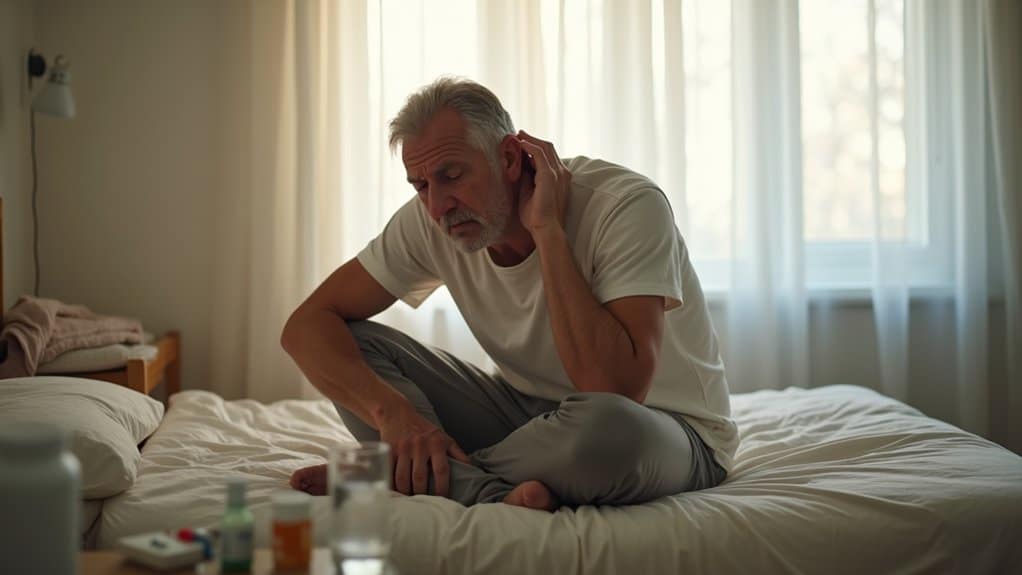
Alcohol withdrawal can be mistaken for a long-lasting hangover when body aches linger past 24 hours alongside anxiety, tremor, and disrupted sleep, symptoms you might easily attribute to heavy drinking alone. The overlap makes distinction difficult, since both conditions share fatigue, poor rest, and generalized muscle discomfort. You can recognize withdrawal by its timeline: instead of resolving within 24 to 48 hours, symptoms persist or intensify over several days. Tremor, heightened anxiety, and continued sleep disruption point toward withdrawal rather than a typical hangover, where dehydration and inflammation dominate. Mild withdrawal reflects your nervous system readjusting after regular or heavy intake, not just the acute effects of a single episode. When aches outlast the expected hangover window and pair with these signs, you should consider withdrawal and seek medical evaluation.
What Other Medical Conditions Can Cause Lingering Body Pain Around the Same Time
Several medical conditions unrelated to alcohol can cause lingering body pain around the same time, including infections, inflammatory flares, and musculoskeletal injuries that alcohol only aggravates. Your symptoms might coincide with an infection, an inflammatory flare, or a musculoskeletal injury that alcohol only aggravates. Consider these overlapping possibilities:
- Viral illness: Influenza and other infections produce systemic myalgia, fatigue, and low-grade fever that resemble hangover soreness.
- Gastritis: Alcohol-induced gastric irritation can cause abdominal and referred pain persisting beyond typical hangover duration.
- Inflammatory or joint conditions: Underlying arthritis or autoimmune activity can intensify when alcohol amplifies systemic inflammation.
If your pain worsens, spreads, or accompanies fever, you should seek clinical evaluation rather than attributing it solely to alcohol.
When Should Body Aches Lasting Several Days Be Checked by a Clinician
Body aches lasting several days should be checked by a clinician when your pain intensifies rather than fades, or disrupts your normal activities. When body aches persist beyond 24 to 48 hours, you shouldn’t automatically attribute them to a lingering hangover, because most alcohol-related soreness resolves within that window. Watch for signs pointing beyond dehydration and inflammation: tremor, anxiety, and disrupted sleep can indicate mild alcohol withdrawal, which prolongs discomfort for several days. Persistent soreness may also reflect gastritis, an aggravated inflammatory or joint condition, or unresolved electrolyte imbalance affecting muscle contraction and relaxation. Don’t dismiss aches that outlast the typical 48-to-72-hour range after heavy drinking. Seek medical attention when symptoms worsen, extend past a day, or accompany fever, weakness, or severe cramps that rehydration and rest don’t relieve.
Heading: When Aches Signal More Than a Hangover, Get Support
Body pain that lingers for days, especially alongside tremors, anxiety, or disrupted sleep, can point to alcohol withdrawal rather than a passing hangover. Quest 2 Recovery offers medically supervised detox that manages withdrawal safely and comfortably, so you don’t have to push through it alone. Verify your insurance or call (855) 783-7888 today for a confidential conversation about whether it’s time to reach out.
Frequently Asked Questions
Can Over-The-Counter Pain Relievers Safely Ease Alcohol-Related Body Aches?
You can ease alcohol-related body aches with certain over-the-counter options, but you’ll want to choose carefully. Avoid acetaminophen after heavy drinking, since combining it with alcohol stresses your liver and raises hepatotoxicity risk. NSAIDs like ibuprofen can reduce inflammation and pain, yet they irritate your gut lining and may worsen alcohol-induced gastritis or bleeding. You’ll get safer relief by hydrating first, waiting until alcohol clears, and using the lowest effective dose.
Does the Type of Alcohol Affect How Sore You Feel?
It’s less about the specific type and more about how much you drink, but some factors matter. Darker liquors like whiskey, brandy, and red wine contain more congeners, toxic byproducts of fermentation, which can intensify inflammation and oxidative stress, potentially worsening your aches. Higher-proof drinks also accelerate dehydration and acetaldehyde buildup. Still, your total alcohol volume, hydration, and sleep quality influence soreness far more than whether you choose vodka or bourbon.
Can Exercise or Stretching Help Relieve Post-Drinking Muscle Aches?
Light stretching and gentle movement can help relieve post-drinking muscle aches by improving circulation and easing stiffness, but you shouldn’t push into intense exercise. When you’re dehydrated and electrolyte-depleted, vigorous workouts can worsen cramps, spasms, and soreness. Prioritize rehydration and electrolyte restoration first, then add low-intensity activity like walking or mobility work. If your aches involve significant fatigue or persist beyond a day, rest and recovery matter more than exertion.
Do Certain Foods Speed up Recovery From Hangover Body Aches?
Yes, certain foods can help. You’ll benefit from potassium-rich options like bananas and leafy greens, plus magnesium and sodium sources to restore electrolytes depleted through alcohol’s diuretic effect. Eating anti-inflammatory foods, fatty fish, berries, and other antioxidant-rich produce, may counter the oxidative stress and elevated IL-6 and TNF-α driving your aches. Don’t skip hydrating foods like broths and water-heavy fruits, since rehydration remains central to easing muscle soreness and stiffness.
Does Age Influence How Long Body Aches Last After Drinking?
Yes, age likely influences how long your body aches last after drinking. As you get older, your body clears alcohol and acetaldehyde more slowly, prolonging oxidative stress and inflammation. You’ll also retain fluids and electrolytes less efficiently, worsening dehydration-related soreness. Age-related declines in sleep quality and muscle recovery can extend aches beyond the typical 24-hour window. If your pain persists past a day or intensifies, seek medical evaluation.