



Your body aches for days after drinking because alcohol’s effects outlast the alcohol itself. Its diuretic action drains fluids and electrolytes, sodium, potassium, magnesium, leaving your muscles tight, weak, and cramped. Meanwhile, elevated inflammatory cytokines lower your pain tolerance, and suppressed protein synthesis slows muscle repair. Disrupted sleep compounds the problem, delaying restorative recovery. Heavier or repeated drinking intensifies each mechanism. Understanding what your specific ache pattern signals can help you know when self-care isn’t enough.
Key Takeaways
- Alcohol’s diuretic effect depletes fluids and electrolytes, causing muscle tightness and cramps that outlast alcohol metabolism.
- Disrupted sleep architecture delays deep sleep-dependent recovery, keeping muscle repair impaired for days.
- Elevated inflammatory cytokines lower pain tolerance and prolong soreness, especially after heavy drinking.
- Suppressed protein synthesis slows muscle repair, extending discomfort beyond the initial hangover period.
- Aches lasting beyond 72 hours, with dark urine, fever, or confusion, warrant prompt medical evaluation.
Why Do Body Aches Last for Days After Drinking
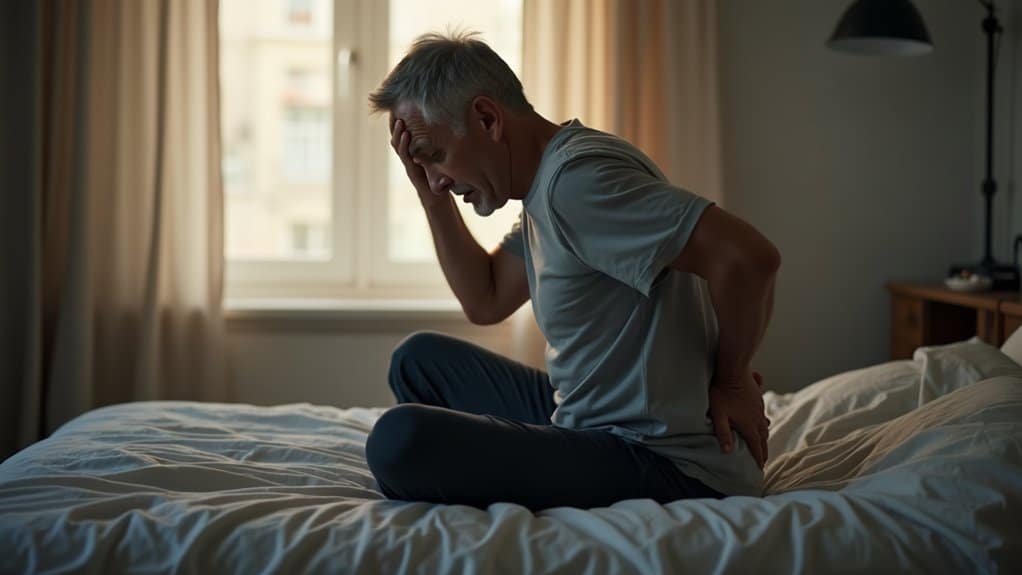
Body aches last for days after drinking because alcohol triggers several overlapping physiological disruptions that extend your recovery timeline. Dehydration and electrolyte loss, sodium, potassium, and magnesium, leave your muscles tight, weak, and prone to cramping. Alcohol also provokes a systemic inflammatory response, elevating cytokines that lower your pain tolerance and intensify soreness. Impaired protein synthesis and disrupted sleep slow muscle repair, which is why you’ll notice body aches 2 days after drinking. Blood sugar dysregulation and nutrient depletion further contribute to diffuse weakness. If you’re experiencing body aches 3 days after drinking, prolonged dehydration or significant inflammation may be responsible. Most lingering body aches after alcohol resolve within 24 to 72 hours, though severe episodes can extend discomfort longer. If you experience body aches after alcohol, stay hydrated, replenish electrolytes, and try gentle stretching. Moderating your drinking may significantly reduce these symptoms.
When Can Poor Sleep Dehydration or Physical Strain Outlast the Main Hangover
Poor sleep, dehydration, and physical strain persist after your blood alcohol drops to zero because once alcohol clears, its downstream effects don’t reset instantly. Alcohol acts as a diuretic, so fluid and electrolyte losses, sodium, potassium, magnesium, can take longer to correct than the alcohol takes to metabolize. If you don’t rehydrate and replace minerals, cramping and soreness continue. Alcohol also disrupts sleep architecture, suppressing restorative deep sleep. Since muscle repair and protein synthesis depend on quality sleep, impaired recovery extends aches beyond the acute hangover. Physical strain compounds this: reduced coordination during intoxication increases minor overuse and micro-injury, which then heal slowly given depressed protein synthesis. Combined, these mechanisms let discomfort outlast intoxication, especially after heavy or repeated drinking episodes. Body pain after drinking can range from mild discomfort to intense soreness, often worsened by poor hydration and inadequate nutritional replenishment.
Why Can Heavier Alcohol Use Produce a Longer Recovery Period

Heavier alcohol use produces a longer recovery period because the more you drink, the more mechanisms you stack against recovery. Higher alcohol volumes intensify diuresis, driving greater fluid and electrolyte loss, so your sodium, potassium, and magnesium deficits deepen and cramping worsens. Larger doses amplify cytokine release, prolonging the inflammatory response that lowers your pain tolerance. Heavy intake suppresses protein synthesis more aggressively, further impairing muscle repair, while compounding sleep disruption slows recovery across successive nights. Blood sugar regulation destabilizes, and nutrient depletion accelerates when intake outpaces replacement. Because these effects scale with dose, your body clears them slower, extending discomfort from the typical 24 to 48 hours toward 72 hours or beyond. If aches persist past that window or intensify, you’re likely facing more than a standard hangover and should seek evaluation.
How Do Improving Persistent Worsening and Recurrent Body Aches Differ
Improving, persistent, worsening, and recurrent body aches differ in how they behave over time, and that behavior tells you more than the pain itself does. Improving aches ease as you rehydrate and rest, typically resolving within 24 to 72 hours. Persistent aches hold steady despite fluids, nutrient replacement, and sleep, suggesting ongoing dehydration or electrolyte imbalance. Worsening aches intensify and may pair with swelling, weakness, dark urine, or confusion, signs pointing toward alcoholic myopathy or another serious condition.
| Pattern | What It Signals |
|---|---|
| Improving | Normal hangover recovery |
| Persistent | Unresolved imbalance or depletion |
| Worsening | Possible myopathy or tissue injury |
| Recurrent | Ongoing alcohol-related harm |
Recurrent aches return after each drinking episode, warning that alcohol’s causing repeated damage. Tracking these patterns helps you decide when self-care suffices and when evaluation’s necessary.
When Can Alcohol Withdrawal Be Mistaken for a Long-Lasting Hangover
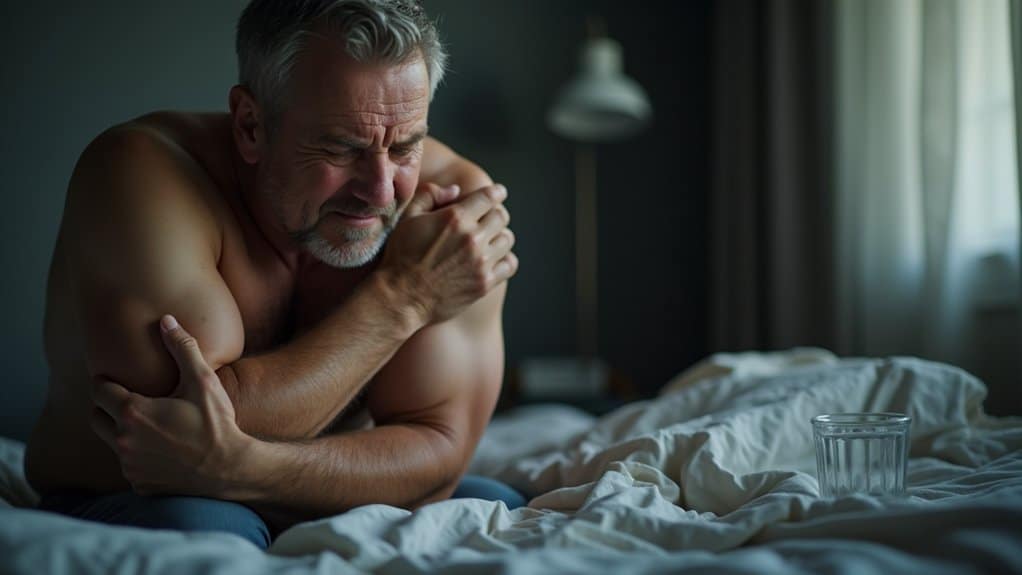
Alcohol withdrawal can be mistaken for a long-lasting hangover when body aches linger past the typical 72-hour hangover window. Withdrawal emerges when you’ve been drinking heavily and regularly, then reduce or stop intake, triggering central nervous system hyperexcitability. Unlike hangover aches driven by dehydration and inflammation, withdrawal produces muscle pain alongside tremor, sweating, anxiety, elevated heart rate, and insomnia. These symptoms often intensify 24 to 72 hours after your last drink, overlapping the window where you’d expect a hangover to resolve. If your aches persist and you notice escalating agitation, nausea, or hand tremors, you’re likely experiencing withdrawal, not a lingering hangover. Severe withdrawal can progress to seizures or delirium tremens, so you should seek medical evaluation when these warning signs appear.
What Other Medical Conditions Can Cause Lingering Body Pain Around the Same Time
Several medical conditions can cause lingering body pain around the same time as a hangover. Viral infections like influenza produce myalgia, fatigue, and fever that overlap with post-drinking symptoms, making the source difficult to distinguish. Overexertion or unnoticed muscle strain from physical activity can generate delayed-onset soreness that surfaces the next day. Autoimmune and inflammatory conditions, including fibromyalgia or early rheumatologic flares, can intensify diffuse aching. Electrolyte disturbances from other causes, such as poor nutrition or medication effects, also contribute. Stress and disrupted sleep independently lower your pain threshold. If pain persists beyond 72 hours, worsens, or presents with fever, swelling, dark urine, or neurological changes, you shouldn’t assume alcohol’s the cause. Seek evaluation to identify the underlying condition. Hangover aches and chills can worsen due to dehydration, nutrient loss, and underlying health issues. Understanding this interplay is crucial for proper management.
When Should Body Aches Lasting Several Days Be Checked by a Clinician
Body aches lasting beyond 72 hours fall outside the expected hangover window and merit clinical evaluation. Certain warning signs demand faster action. If you notice dark or tea-colored urine, severe or worsening muscle pain, marked weakness, or swelling, seek care promptly, since these can indicate alcoholic myopathy or rhabdomyolysis. Confusion, fever, or pain that disrupts daily activity also warrants evaluation. If rehydration and rest don’t improve your symptoms, don’t wait it out. Recurrent body aches after drinking signal ongoing harm and justify a broader discussion about alcohol use. When symptoms escalate rather than resolve, a clinician should identify the underlying cause.
When Recurring Aches Point to a Bigger Pattern
Body aches that return after every drinking episode, or come with warning signs like dark urine, tremors, or worsening pain, can signal ongoing alcohol-related harm or withdrawal. Quest 2 Recovery provides medically supervised detox that safely manages withdrawal and treats the underlying cause. Verify your insurance or call (855) 783-7888 today for a confidential conversation about whether recurring symptoms mean it’s time for support.
Frequently Asked Questions
Can Drinking Water Before Bed Prevent Next-Day Body Aches?
Drinking water before bed can reduce next-day body aches, but it won’t eliminate them entirely. Since alcohol acts as a diuretic, you’re losing fluids and electrolytes, so rehydrating helps counter the dehydration that makes your muscles feel tight and sore. However, water alone can’t address inflammation, impaired muscle recovery, or nutrient depletion. You’ll get better results by pairing fluids with electrolytes, food, and adequate rest to support recovery.
Does the Type of Alcohol Affect Body Ache Severity?
The type doesn’t directly determine your ache severity, but it can influence contributing factors. What matters most is your total alcohol volume, which drives dehydration, electrolyte loss, and inflammation. Darker drinks containing congeners may worsen your overall hangover symptoms, indirectly intensifying aches. However, your hydration status, nutrient intake, and consumption amount outweigh beverage type. If you’re drinking heavily regardless of type, you’ll likely experience similar muscle soreness and prolonged discomfort.
Are Over-The-Counter Pain Relievers Safe for Hangover Body Aches?
You can use OTC pain relievers cautiously, but you’ll need to choose carefully. Avoid acetaminophen, since combining it with alcohol raises your risk of liver damage. NSAIDs like ibuprofen can irritate your stomach lining and worsen dehydration-related kidney stress, so take them with food and adequate fluids. Wait until alcohol’s cleared your system before dosing. If your aches persist beyond 72 hours or you notice dark urine, seek medical evaluation.
Does Age Influence How Long Hangover Aches Last?
Yes, age influences how long your aches persist. As you get older, your body clears alcohol more slowly, rehydrates less efficiently, and repairs muscle tissue at a reduced rate. Your electrolyte regulation and blood sugar control also decline, prolonging discomfort. Sleep quality often worsens with age, further slowing recovery. You’ll likely notice aches lingering closer to the 48-to-72-hour range, while younger individuals typically recover within 24 hours.
Can Regular Exercise Reduce Alcohol-Related Muscle Soreness?
Regular exercise won’t directly counteract alcohol-related muscle soreness, but it can improve your baseline resilience. When you’re conditioned, your muscles recover more efficiently and tolerate inflammatory stress better. However, alcohol still impairs protein synthesis and disrupts recovery, so you won’t fully escape soreness. Don’t exercise while dehydrated or acutely hungover, you’ll increase strain and injury risk. Focus on hydration, electrolytes, and rest first, then resume training once you’ve recovered.