



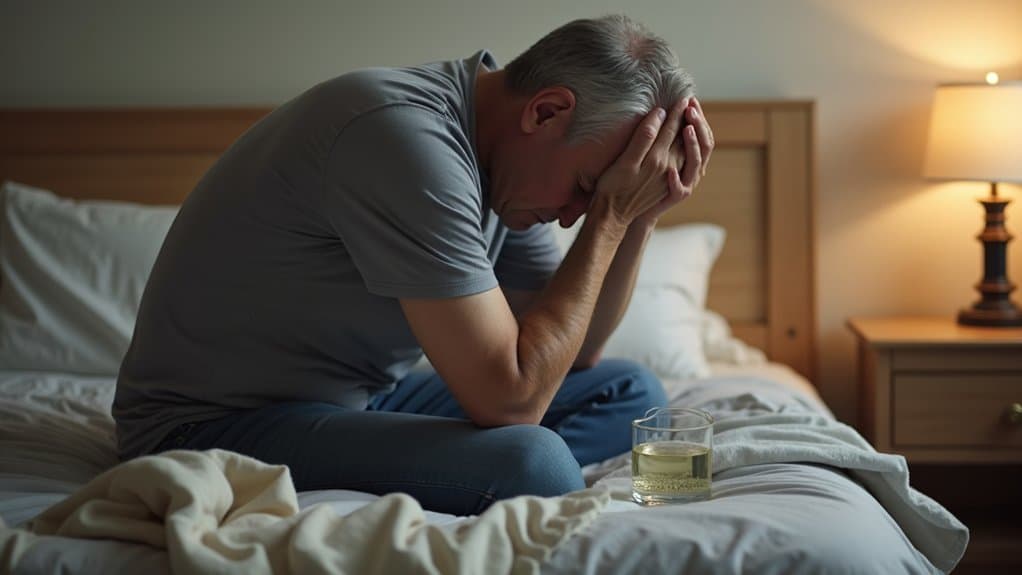
That achy, bruised feeling after drinking comes from alcohol triggering a low-grade inflammatory response that releases cytokines, making your muscles, joints, and skin tender to the touch. As your blood alcohol drops, you experience rebound hyperalgesia, which heightens your pain sensitivity so ordinary pressure feels worse. Dehydration and lost electrolytes, like potassium and magnesium, impair your muscle function and add to the ache. But several other factors can explain this soreness, and each deserves a closer look.
Key Takeaways
- Alcohol triggers a low-grade inflammatory response, releasing cytokines that cause diffuse muscle, joint, and skin tenderness resembling a flu-like ache.
- As blood alcohol declines, rebound hyperalgesia heightens pain sensitivity, amplifying ordinary touch and making your body feel bruised without any injury.
- Dehydration and loss of electrolytes like potassium and magnesium impair muscle function, creating heavy, achy feelings in large muscles.
- Impaired coordination while drinking increases falls and bumps that go unnoticed due to dulled pain, later revealing real soreness or bruising.
- Frequent unexplained bruising, burning limbs, or skin sensitivity may signal liver strain, low platelets, or neuropathy needing medical attention.
Why Does Your Body Feel Bruised or Hurt to Touch After Drinking
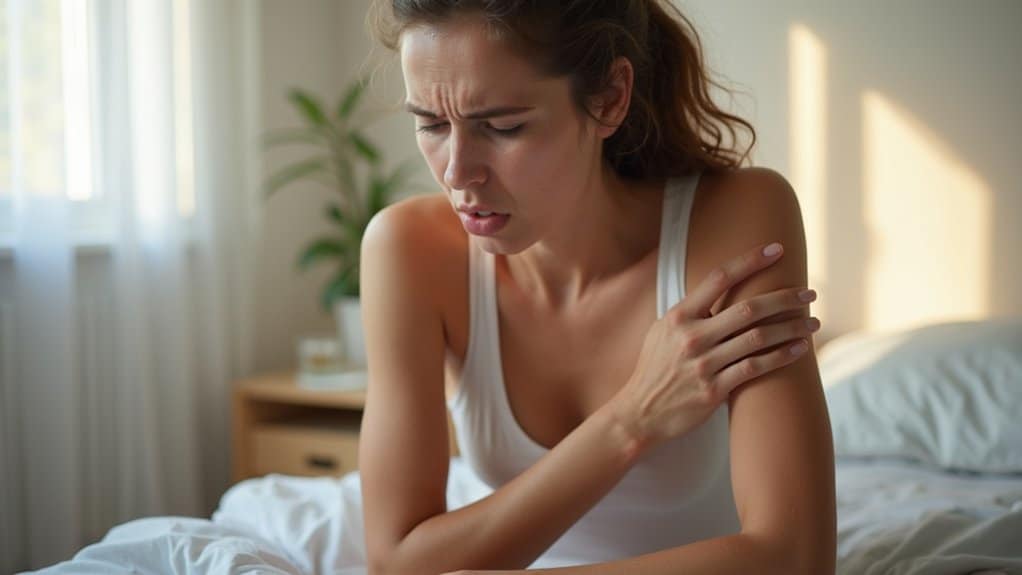
Your body feels bruised or hurt to touch after drinking because of several overlapping mechanisms. Alcohol triggers a low-grade inflammatory response, releasing cytokines that make muscles, joints, and skin feel tender. As blood alcohol drops, pain perception rebounds, producing hyperalgesia, a stronger-than-normal response to ordinary pressure. This is why your body feels bruised after drinking without any impact. Dehydration and electrolyte loss, particularly potassium and magnesium, impair muscle function and add to generalized soreness. When your body hurts to touch after drinking, rebound sensitivity often amplifies normal contact. If your skin hurts after drinking persistently, or you notice swelling, weakness, or bruising, consider hidden injury or nerve irritation rather than simple hangover soreness.
Can Muscle Tenderness Feel Like Bruising Without Visible Bruises
Muscle tenderness can absolutely feel like bruising without any visible marks on your skin. Several mechanisms converge to make your muscles ache and feel bruised even when no impact occurred. Your pain perception rebounds as blood alcohol drops, and inflammation heightens sensitivity, so normal pressure registers as pain.
- Dehydration and electrolyte loss: Depleted potassium and magnesium impair muscle contraction and relaxation, creating heavy, achy sensations in large muscle groups.
- Inflammatory cytokines: Alcohol-triggered inflammation produces diffuse, flu-like aching that mimics deep tissue bruising.
- Rebound hyperalgesia: Your pain response intensifies as alcohol wears off, making ordinary touch feel harsher.
Together, these factors explain why you feel bruised without any actual soft-tissue trauma or discoloration present.
How Can Falls Bumps or Poor Coordination While Drinking Cause Unnoticed Injuries

Falls, bumps, and poor coordination while drinking cause unnoticed injuries because alcohol impairs coordination and briefly dulls pain, so you don’t register the impact at the time. Falls, bumps, and collisions become more likely during a drinking episode. You might strike a table edge, stumble into a wall, or take a minor fall without registering the impact at the time. Because alcohol briefly dulls pain, you often don’t notice the trauma until it wears off. What feels like a hangover ache can actually be a bruise, sprain, or minor soft-tissue injury from an event you don’t fully remember. Watch for localized soreness in one area rather than diffuse aching. If you notice swelling, weakness, or bruising, don’t assume it’s a simple hangover. Those signs point to an actual injury needing attention.
How Do Widespread Localized One-Sided and Visible-Bruising Patterns Differ
Widespread, localized, one-sided, and visible-bruising patterns differ in both cause and warning signs. Widespread, symmetrical aching typically points to systemic causes like inflammation, dehydration, or rebound pain sensitivity. Localized soreness in one muscle group often reflects electrolyte-driven cramping or a specific strain. One-sided pain raises concern for an unnoticed injury, since falls and bumps rarely affect both sides equally. Visible bruising signals actual vessel damage or impaired clotting.
| Pattern | Likely Cause | What to Watch |
|---|---|---|
| Widespread | Cytokines, dehydration | Fever, severe fatigue |
| Localized | Electrolyte loss, strain | Persistent cramping |
| One-sided | Trauma, fall | Swelling, weakness |
| Visible bruise | Vessel/platelet issue | Spreading, frequency |
| Burning limbs | Neuropathy | Numbness, allodynia |
Matching your pattern helps you decide whether to rest or seek evaluation.
Why Can Frequent Heavy Alcohol Use Raise Concern About Easy Bruising
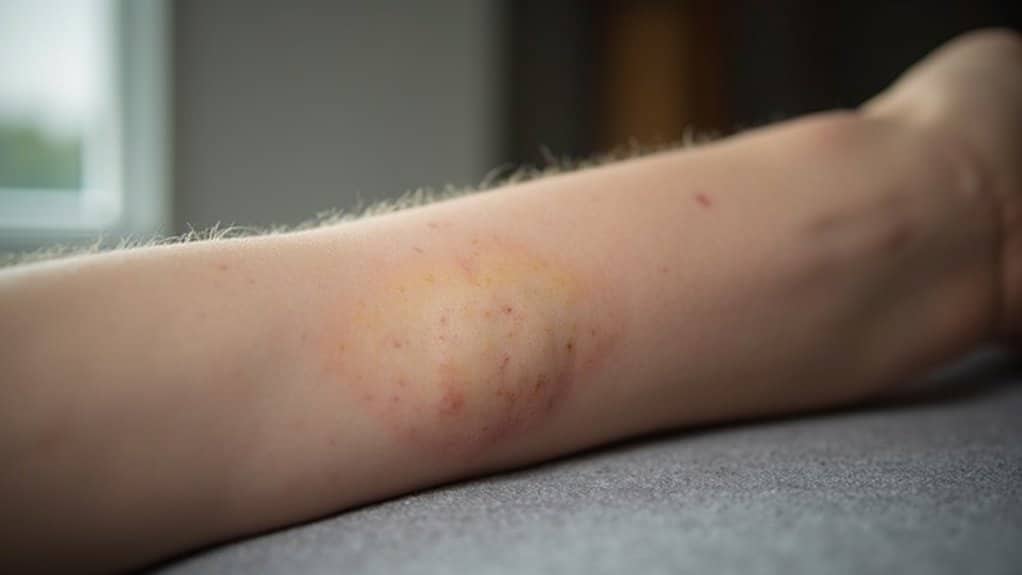
Frequent heavy alcohol use raises concern about easy bruising because alcohol affects the systems that protect you from bleeding. Heavy drinking weakens several defenses that normally keep blood inside your vessels and clotting on schedule.
Here’s what alcohol disrupts:
- Blood vessels: Alcohol dilates your vessels and makes them easier to rupture, so minor pressure produces visible bruises.
- Platelets: Heavy drinking can lower your platelet count, weakening the clotting response you depend on to stop bleeding.
- Liver function: Alcohol-related liver injury impairs clotting factor production, contributing to unexplained bruising and bleeding.
If you notice repeated, unexplained bruises after drinking, treat it as a warning sign of excessive alcohol use or liver strain.
When Can Skin Sensitivity Suggest Something Other Than a Typical Hangover
Skin sensitivity suggests something other than a typical hangover when a light touch feels painful, a sign of allodynia, or you notice burning, sharp, or aching sensations in your hands, feet, arms, or legs, which points toward alcohol-related neuropathy rather than simple soreness. Watch for how the pain behaves. Typical hangover soreness feels diffuse and improves within a day as inflammation settles and you rehydrate. Nerve-related pain behaves differently. Resting pain that lingers or increased sensitivity that outlasts other hangover symptoms also suggests nerve irritation. These patterns often follow chronic or heavy drinking. When touch tenderness persists or localizes to your limbs, don’t assume it’s a hangover, it may reflect ongoing nerve damage that warrants medical evaluation.
When Should Unexplained Bruising Swelling or Severe Tenderness Be Evaluated
Unexplained bruising, swelling, or severe tenderness should be evaluated when these signs can point to injury or an underlying blood or liver problem, not typical hangover soreness. Alcohol can lower platelet counts, dilate and rupture vessels, and impair clotting, while alcohol-related liver injury contributes to unexplained bleeding and bruising. When drinking impairs coordination, unnoticed falls and impacts can cause soft-tissue trauma that shows up later.
Unexplained bruising or swelling after drinking may signal injury, low platelets, or liver strain, not ordinary hangover soreness.
Get evaluated when you notice:
- Localized swelling, weakness, or a bruise that suggests a sprain or soft-tissue injury.
- Repeated unexplained bruising after drinking, a possible warning of liver strain or low platelets.
- Severe or persistent tenderness that doesn’t ease with rehydration and rest.
Heading: Recurring Pain After Drinking Is Worth Paying Attention To
Frequent tenderness, unexplained bruising, or burning limbs after drinking can signal more than a hangover, sometimes pointing to liver strain, low platelets, or the body’s dependence on alcohol. Quest 2 Recovery offers medically supervised detox and inpatient care that treats the root cause safely. Verify your insurance or call (855) 783-7888 today for a confidential conversation about whether these signs mean it’s time for support.
Frequently Asked Questions
How Long Does Alcohol-Related Body Tenderness Usually Last After Drinking?
Your alcohol-related body tenderness typically resolves within 24 to 72 hours, tracking your overall hangover timeline. As your blood alcohol drops, rebound pain sensitivity and inflammation peak, then fade as you rehydrate and replace electrolytes. You’ll usually feel better once fluids and rest restore normal muscle function. However, if soreness, bruising, weakness, or burning limb pain lingers beyond a few days, don’t assume it’s a hangover, it may signal injury or nerve damage.
Does Drinking Water Before Bed Prevent Morning Soreness and Aches?
Drinking water before bed can help, but it won’t fully prevent morning soreness. Since alcohol acts as a diuretic, rehydrating counters fluid loss that worsens muscle tightness and cramping. You’ll also want to replace electrolytes like potassium and magnesium, which support normal muscle function. However, water won’t address inflammation, rebound pain sensitivity, or nerve-related aches. So while it eases dehydration-driven soreness, it’s only one part of your recovery.
Which Foods or Supplements Help Reduce Hangover-Related Muscle Pain?
You’ll benefit from replenishing electrolytes, since alcohol depletes potassium and magnesium, which impairs muscle contraction and relaxation. Eat potassium-rich foods like bananas or leafy greens, and consider magnesium-containing options such as nuts or seeds. Rehydrate with water or electrolyte drinks to ease muscle tightness and cramping. These interventions address fluid and electrolyte shifts driving your soreness. If swelling, weakness, or bruising accompanies pain, don’t assume it’s just a hangover.
Can Certain Alcohol Types Cause More Body Soreness Than Others?
The available evidence doesn’t identify specific alcohol types as directly causing more body soreness than others. What matters most is the total amount of alcohol you consume, since that drives inflammation, dehydration, and rebound pain sensitivity. Higher-proof or larger quantities increase your diuretic fluid loss and cytokine response, worsening aches. If you’re noticing consistent soreness patterns, it’s likely your overall intake and hydration status, not the beverage type, that’s responsible.
Is It Safe to Take Painkillers for Hangover Tenderness?
You should be cautious. Avoid acetaminophen (Tylenol) after drinking, since combining it with alcohol strains your liver and raises injury risk. NSAIDs like ibuprofen can irritate your stomach lining and worsen alcohol-related gastric bleeding, especially if you’re dehydrated. If you take anything, wait until alcohol’s cleared, rehydrate first, and use the lowest effective dose. If tenderness comes with swelling, weakness, or bruising, don’t self-treat, consult a clinician instead.