






Yes, the VA provides medically managed detox for veterans. You can safely stop using alcohol, opioids, or sedatives under clinical supervision. Your care team matches the setting to your severity, offering ambulatory, residential, inpatient, or ICU-capable care. They use validated tools like CIWA-Ar to guide alcohol withdrawal treatment and adjust medications as needed. If complications arise, they escalate your care immediately. Keep going to learn when and how each option applies.
Key Takeaways
- Yes, the VA provides medically managed withdrawal to help veterans stop substance use safely, covering alcohol, drugs, and cravings reduction.
- Care levels match clinical severity, ranging from ambulatory and residential detox to hospital-based stabilization and ICU-capable monitoring.
- The VA uses validated tools like CIWA-Ar to assess withdrawal severity and determine the appropriate care setting.
- Treatment is tailored by substance, using benzodiazepines for alcohol, controlled tapers for sedatives, and craving-reducing medications for opioids.
- Ongoing addiction treatment follows detox, including outpatient care, residential programs, medications, and aftercare to support long-term recovery.
Does the VA Provide Medical Detox for Veterans


Yes, the VA provides medical detox for veterans. Through VA detox services, you get medically managed withdrawal designed to help you stop substance use safely and stabilize during withdrawal. VA addiction medicine treats both drug and alcohol dependence, using medications and therapies that reduce withdrawal symptoms and cravings. Veterans seeking assistance can benefit from VA addiction treatment coverage, which provides access to comprehensive care. This coverage ensures that those in need receive the support and resources necessary for recovery.
Veteran detox treatment spans multiple levels of care, including ambulatory, inpatient, ICU, and residential settings, matched to your clinical severity. For moderate to severe alcohol withdrawal, VA/DoD guidelines recommend benzodiazepines with adequate monitoring, and facilities use validated tools like CIWA-Ar to assess severity. Many veterans find support through VA alcohol rehab, which offers individualized therapies, group sessions, and peer support to promote recovery and long-term sobriety.
If you’re facing higher-risk complications such as seizures or delirium tremens, you’ll receive inpatient monitoring and, when needed, transfer to a higher level of care for safe stabilization.
When Can a Veteran Need Medically Managed Withdrawal Services
A veteran needs medically managed withdrawal when stopping alcohol or drugs puts them at risk for serious complications. For alcohol, the VA uses validated tools like the CIWA-Ar to measure withdrawal severity and guide your level of care. If you’re at risk for seizures or delirium tremens, you’ll likely need inpatient care with close monitoring. Moderate to severe alcohol withdrawal warrants benzodiazepines with adequate monitoring under VA/DoD guidelines. If your withdrawal risk is mild to moderate and you’re psychiatrically stable, ambulatory detox may be appropriate. Your clinical severity determines the setting, ambulatory, inpatient, ICU, or residential. When complications or instability appear, you’ll be transferred to a higher level of care.
How Can Alcohol Opioid and Sedative Withdrawal Require Different Clinical Approaches

Alcohol, opioid, and sedative withdrawal require different clinical approaches because each substance affects your body through distinct mechanisms, so the VA tailors your withdrawal management to the drug you’re stopping. If you’re withdrawing from alcohol, the VA uses validated tools like the CIWA-Ar to score severity and, for moderate to severe cases, administers benzodiazepines with adequate monitoring to prevent seizures and delirium tremens. Alcohol withdrawal can turn life-threatening, so protocols require escalation to inpatient or ICU care when instability appears. Sedative withdrawal shares similar risks because both act on the same central nervous system pathways, often requiring a controlled taper. Opioid withdrawal, though rarely fatal, causes intense discomfort, so the VA relies on medications that reduce cravings and symptoms. By matching your treatment to the substance, the VA keeps your detox safe and stable.
How Do Outpatient Withdrawal Management Residential Detox and Hospital-Based Stabilization Differ
Outpatient withdrawal management, residential detox, and hospital-based stabilization differ by the intensity of monitoring and the withdrawal severity each is designed to treat. Ambulatory withdrawal management suits mild to moderate cases when you’re psychiatrically stable and can attend scheduled visits. Residential detox provides 24-hour supervision within a structured recovery setting. Hospital-based stabilization addresses severe or complicated withdrawal, including seizures or delirium tremens, with intensive monitoring and escalation to ICU when needed.
| Level of Care | Withdrawal Severity | Monitoring |
|---|---|---|
| Ambulatory | Mild to moderate | Scheduled visits |
| Residential | Moderate | 24-hour supervision |
| Hospital-Based | Severe/complicated | Intensive, ICU-capable |
Your VA care team uses validated tools like CIWA-Ar to assess severity and place you in the appropriate setting.
What Medications Can VA Clinicians Use During Withdrawal Management
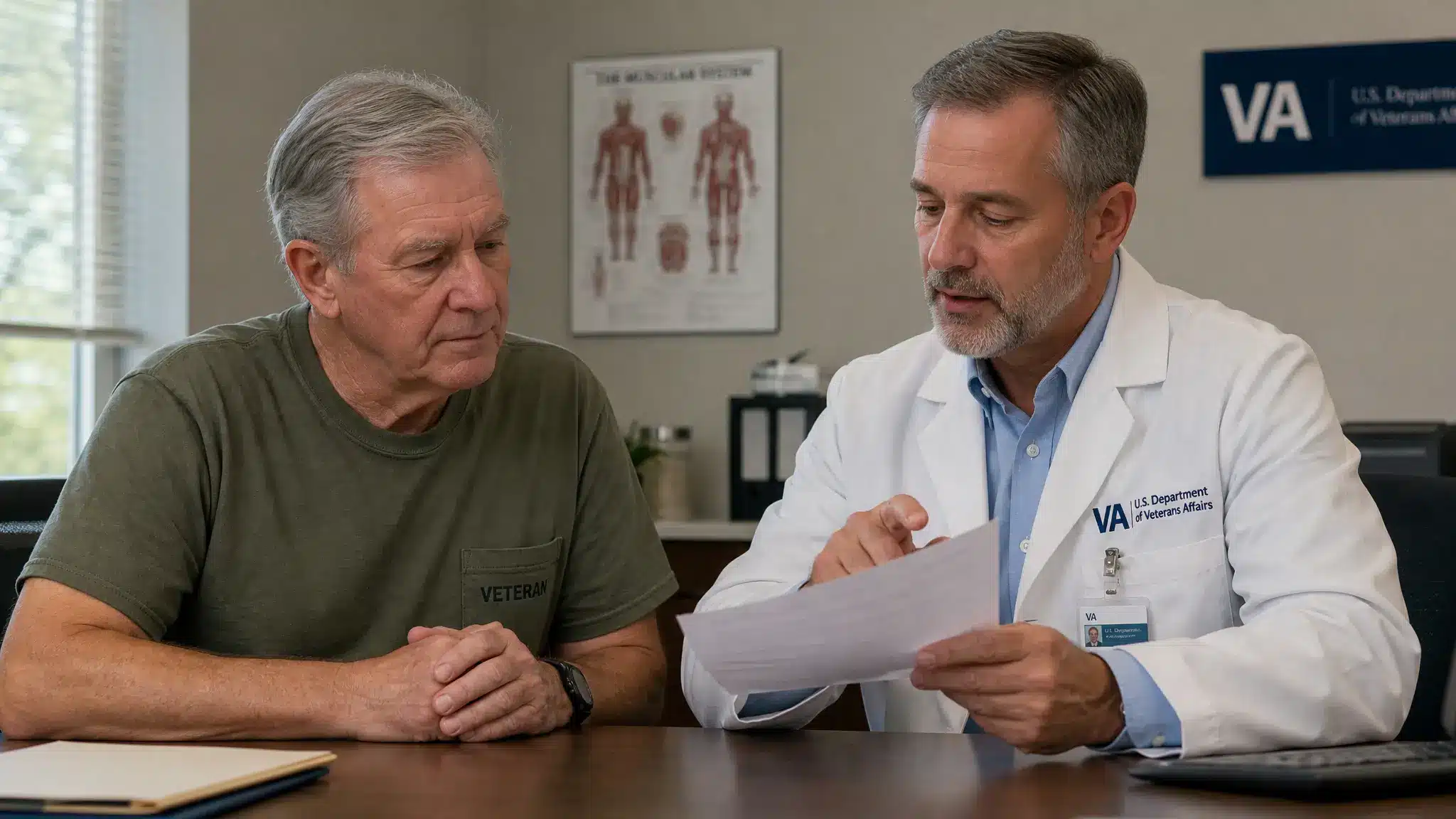
VA clinicians can use benzodiazepines, paired with adequate monitoring, to manage moderate to severe alcohol withdrawal. These medications control symptoms, prevent complications, and support stabilization, as recommended by the VA/DoD guideline. Your care team doses medications based on withdrawal severity, using validated tools like CIWA-Ar to guide administration and adjustment. This approach reduces withdrawal symptoms, lowers seizure risk, and helps prevent progression to delirium tremens.
Beyond acute withdrawal, VA clinicians can prescribe medications that reduce cravings and support your longer-term recovery. If your withdrawal escalates or complications appear, they’ll adjust your medications and transfer you to a higher level of care. Because dosing depends on your clinical status, monitoring stays continuous, so your treatment matches your risk throughout the withdrawal process.
Why Can Detox Services and Settings Vary Between VA Facilities
Detox services and settings vary between VA facilities because each site delivers different levels of care based on its resources, staffing, and program structure. Some VA medical centers offer inpatient medically managed detox for serious withdrawal risk, including delirium tremens or seizures, while others provide ambulatory detox for mild to moderate cases when you’re psychiatrically stable. Your local facility’s capabilities determine whether you’ll receive care through inpatient, ICU, residential, or outpatient settings. Each site must maintain written protocols for diagnosis, monitoring, and escalation, but implementation depends on available staff and clinical infrastructure. When complications appear, your facility may transfer you to a higher level of care or coordinate emergency department access. That’s why the detox options you’ll find can differ between locations.
What Ongoing Addiction Treatment Can Follow VA Detox
Ongoing addiction treatment that can follow VA detox includes outpatient treatment, residential treatment, medications, aftercare services, and consultative support. Outpatient treatment combines counseling and evidence-based therapies while you live at home. If your situation requires more structure, residential treatment offers a supervised environment for sustained recovery. The VA also provides medications that reduce cravings and support abstinence for alcohol and opioid use disorders. Aftercare services help you maintain progress and prevent relapse, and consultative support addresses co-occurring conditions. Your treatment team adjusts these levels of care as you improve. This continuum is designed to carry you from initial stabilization into long-term, durable recovery. VA recovery programs for veterans are essential in providing a comprehensive approach to healing. These programs often include access to specialized therapies tailored to the unique experiences of veterans.
Safe, Medically Supervised Detox Built Around Your Needs
Stopping alcohol, opioids, or sedatives is safest under clinical supervision, and Quest 2 Recovery provides medically managed detox treatment that matches the level of care to your withdrawal severity. Our team manages symptoms, monitors closely, and guides you into ongoing recovery afterward. Verify your insurance or call (855) 783-7888 today to start with a confidential conversation about safe, supported withdrawal.
Frequently Asked Questions
Does VA Detox Cost Veterans Anything Out of Pocket?
Your out-of-pocket costs depend on your specific VA eligibility, priority group, and financial situation. Many veterans receive substance use and detox services at little or no cost, but some may owe copayments based on their assigned priority group and service-connected status. You’ll get the most accurate answer by contacting your local VA medical center or applying for VA health care. Copay rules vary, so verify your individual eligibility directly with the VA.
Can Family Members Be Involved in a Veteran’s Detox Process?
Yes, your family can be involved in your detox process. The VA offers a broader recovery system that includes therapy, outpatient care, residential treatment, and aftercare, where family participation may support your stabilization and long-term recovery. You’ll want to contact your local VA medical center or Substance Use Disorder program to ask how family involvement fits your specific treatment plan, since options depend on your clinical needs and local program rules.
How Long Does a Typical VA Detox Program Last?
Your detox length depends on the substance, your withdrawal severity, and the level of care you need. Alcohol withdrawal typically resolves within several days, though closer monitoring may extend your stay. The VA uses validated tools like CIWA-Ar to track your progress and adjust care. Ambulatory detox may last a few days, while inpatient or ICU care continues until you’re stabilized. Detox then transitions you into longer-term recovery treatment.
Can Veterans Access VA Detox Without Prior Enrollment?
Yes, you can access VA detox even without prior enrollment. If you don’t have an assigned VA primary care provider, you can still contact your local VA medical center, reach out to a Substance Use Disorder (SUD) program directly, or call the VA general information line at 800-827-1000. While access generally begins after applying for VA health care, some sites offer walk-in or same-day withdrawal evaluations, depending on local program rules.
Are There Alternatives if a Veteran Can’t Access VA Detox Right Away?
Yes. If VA detox isn’t immediately available due to wait times, distance, or eligibility questions, you have options. Community-based treatment centers that work with veterans can provide medically supervised detox and often accept TRICARE and other insurance plans. Some facilities offer same-day or next-day admission for urgent withdrawal needs. If you’re facing a delay, don’t wait to reach out, since alcohol and sedative withdrawal can become dangerous quickly. Contact a local provider or your VA medical center to find the fastest safe path to care.