






VA residential and outpatient addiction treatment differ mainly in where you live during care. With residential treatment, you live on-site with 24/7 structured support, frequent clinical contact, and help addressing housing, employment, and health needs. It’s best for complex or unstable situations. With outpatient care, you live at home and attend scheduled therapy, counseling, and case management, ideal when your housing’s stable. You can also move between settings as your needs change. Here’s how to know what fits you.
Key Takeaways
- Residential provides live-in care with 24/7 staff support, structured routines, and continuous clinical contact for complex or unstable situations.
- Outpatient lets veterans live at home while attending scheduled therapy, counseling, and case management, including evening, weekend, or virtual options.
- Residential addresses housing, employment, health, and safety needs, making it ideal when housing is unstable or far from a VA clinic.
- Outpatient suits veterans with stable housing and supportive home environments, allowing them to maintain work, family, and daily routines.
- Both form a continuum with shared goals, and veterans can move between levels as their clinical needs and stability change.
How Do VA Residential and Outpatient Addiction Treatment Differ
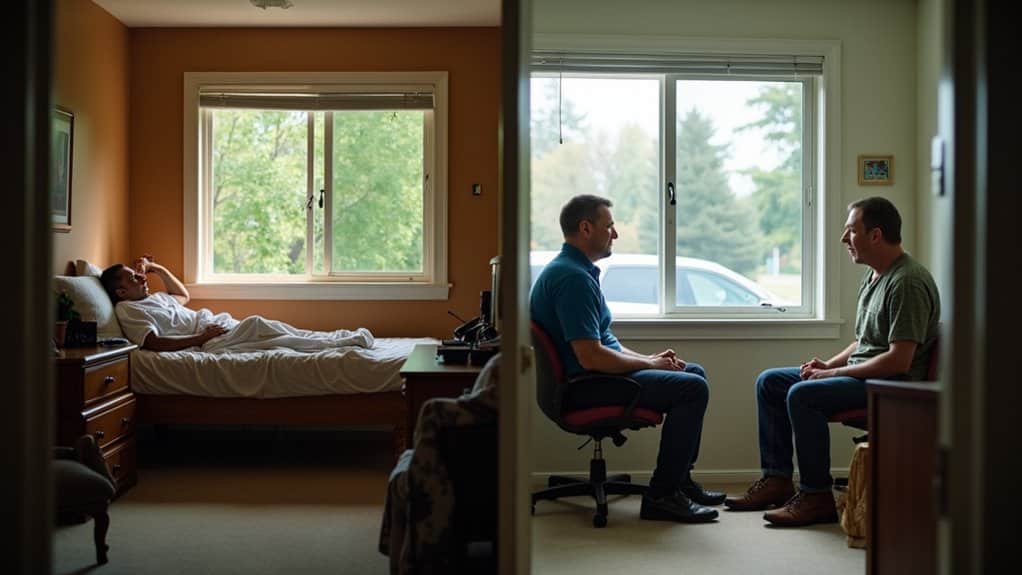
VA residential and outpatient addiction treatment differ in where you live during care and how intensive that care is. A VA residential rehabilitation treatment program is live-in care, giving you 24/7 structured support in one setting, counseling, psychiatry, group therapy, and broader rehabilitation for housing, employment, and health needs. VA outpatient rehab lets you live at home while attending scheduled therapy, counseling, and case management sessions, often with evening, weekend, or virtual options. VA alcohol treatment programs effectively address substance use among veterans. With residential and outpatient options tailored to individual needs, they focus on recovery and reintegration into everyday life.
Residential care suits complex or unstable situations that need close monitoring, and outpatient care fits stable living arrangements. A VA rehab program isn’t an either-or choice. Both belong to one continuum, and outpatient follow-up commonly continues after you complete residential treatment for lasting relapse prevention.
Who May Be Able to Receive VA Addiction Treatment While Living at Home
Veterans with stable living situations may be able to receive VA addiction treatment while living at home. If you have reliable housing, supportive relationships, and can manage daily responsibilities, you may be a good candidate for outpatient services. This level of care lets you keep your home, work, and family routines while attending scheduled therapy, counseling, and case management sessions. Ptsd and addiction in veterans can create significant challenges that complicate recovery efforts. Access to appropriate resources and support networks is crucial for those navigating these issues.
You might choose outpatient care when your clinical needs don’t require 24/7 monitoring or a highly structured setting. It also works well as continuing care after residential treatment, supporting relapse prevention as you transition back to daily life.
VA outpatient options include individual counseling, group therapy, psychiatry, and medication-based treatment. With evening, weekend, virtual, and hybrid formats available, you can often find scheduling that fits your circumstances.
Who May Need a Structured VA Residential Rehabilitation Environment
You may need a structured VA residential rehabilitation environment if you’re facing an unstable housing situation, living far from a VA clinic, or managing complex medical and mental health needs alongside substance use. In these cases, you may benefit from a structured, live-in setting. Residential care provides the highest level of non-hospital rehabilitation, with 24/7 support, close monitoring, and multiple services in one place. You might need this level of care when outpatient visits can’t provide enough structure or when your daily environment makes recovery harder. VA residential programs, often averaging around 35 days, address substance use along with physical health, employment, and social needs, giving you a stable foundation before you transition to outpatient continuing care.
How Do Setting Clinical Contact Daily Structure and Independence Differ
Setting, clinical contact, daily structure, and independence differ based on where you receive care. In residential treatment, you live on-site with 24/7 support, close monitoring, and immersive daily programming. In outpatient care, you live at home and attend scheduled sessions, relying more on your own follow-through between visits.
| Residential | Outpatient |
|---|---|
| Live-in setting with 24/7 staff support | Live at home, attend scheduled visits |
| Frequent, continuous clinical contact | Contact limited to appointments |
| Highly structured daily routine | You manage your own daily schedule |
| Temporary separation from home and work | Maintain home, work, and family roles |
Choosing between them depends on how much structure you need right now and whether your living situation supports recovery while you maintain daily responsibilities.
How Can Housing Safety or Social Support Affect Which Treatment Setting Fits
Housing safety and social support directly determine which treatment setting fits your recovery. If you’re living far from a VA clinic or facing unstable housing, residential care may serve you better, since it provides a safe, supportive environment along with 24/7 structure. Residential programs can also address housing needs as part of comprehensive rehabilitation.
If you have stable housing and people at home who support your sobriety, outpatient care lets you attend scheduled sessions while maintaining your routines. But if the people around you use substances or your home feels unsafe, that environment can undermine your progress.
Consider whether your surroundings help or hinder recovery. Your VA care team can help you weigh these factors and choose the right level of care.
Can Veterans Move Between Residential and Outpatient Addiction Treatment
Yes, veterans can move between residential and outpatient addiction treatment, and this movement is often exactly how VA care works. The VA treats substance use disorder as a continuum, not a series of competing options. You might start in a residential program for structured, around-the-clock support, then step down to outpatient care as you stabilize and return home. In fact, outpatient follow-up is commonly required after residential discharge, helping you maintain progress through relapse prevention and continuing care. Rehab services covered by the VA can greatly enhance the recovery process for veterans. These services are designed to address the unique challenges faced by those who have served in the military.
Movement can go the other way, too. If you’re in outpatient treatment and your needs intensify, your care team can help you step up to residential care for closer monitoring. This flexibility lets your treatment match your changing clinical needs and life circumstances, so you get the right level of support at the right time.
How Can a VA Assessment Determine Which Treatment Setting Is Appropriate
A VA assessment determines the appropriate treatment setting by matching you to the right level of support based on your clinical needs. During the assessment, your care team reviews your substance use history, mental and physical health, housing stability, and how far you live from a VA clinic. If you need close monitoring, a structured setting, or stable housing, they may recommend residential care. If your living situation is stable and your clinical needs allow, outpatient treatment lets you continue therapy while staying home.
Because VA treats these as one continuum, your assessment isn’t a one-time decision. As your needs change, your team can adjust your level of care, connecting you with continuing care and relapse prevention support.
Explore VA-Informed Addiction Treatment That Fits Your Life
Finding the right level of care matters, and Quest 2 Recovery helps veterans do exactly that. Whether you need structured residential care with dedicated veterans and military support or flexible continuing care as you stabilize at home, our team addresses substance use alongside mental health and housing needs. Verify your insurance or call (855) 783-7888 today to talk through your options confidentially.
Frequently Asked Questions
Does the VA Cover the Cost of Addiction Treatment?
Yes, the VA covers addiction treatment for eligible Veterans as part of its thorough substance use disorder care. You can access a full continuum of services, from screening and withdrawal management to outpatient, intensive outpatient, residential, and continuing care. These services are available at VA medical centers, clinics, and many Vet Centers. Every VA medical facility offers specialized outpatient SUD services, so you’ll find support close to home when you need it.
Can Family Members Participate in a Veteran’s Addiction Treatment?
Yes, your family members can participate in your addiction treatment. VA programs often offer family counseling as part of both residential and outpatient care, helping your loved ones understand your recovery and strengthen your support system. You’ll also find self-help groups and continuing care services that can involve family. Whether you’re in a structured residential setting or attending scheduled outpatient visits, involving your family can reinforce relapse prevention and support your long-term healing.
Are Medications Available to Help Reduce Cravings During Recovery?
Yes, medications are available to help reduce your cravings during recovery. The VA offers medication-based treatment as part of both residential and outpatient care, using medications that can ease cravings and support your progress. You’ll often find these paired with counseling, group therapy, and case management for a well-rounded approach. Whether you’re living at home or in a structured setting, you can access these medications to strengthen your recovery.
Can Veterans Receive Addiction Treatment Virtually or Through Telehealth?
Yes, you can receive addiction treatment virtually through the VA. Outpatient services are offered in person, virtually, or in hybrid formats, depending on your therapeutic needs. This flexibility means you can access individual counseling, group therapy, and case management from home when that’s clinically appropriate. Telehealth can also expand access if you live far from a VA clinic. Talk with your care team to find the format that works best for you.
What Happens During Medical Withdrawal Management or Detoxification at the VA?
During medical withdrawal management, you’ll receive supervised care as substances leave your body safely. The VA monitors your symptoms closely, providing medications when needed to ease discomfort and reduce risks. You’re supported by clinical staff who watch for complications and keep you stable. Once you’ve stabilized, your team connects you with ongoing SUD care, whether outpatient, intensive outpatient, or residential, so you can continue recovery with the right level of support.