

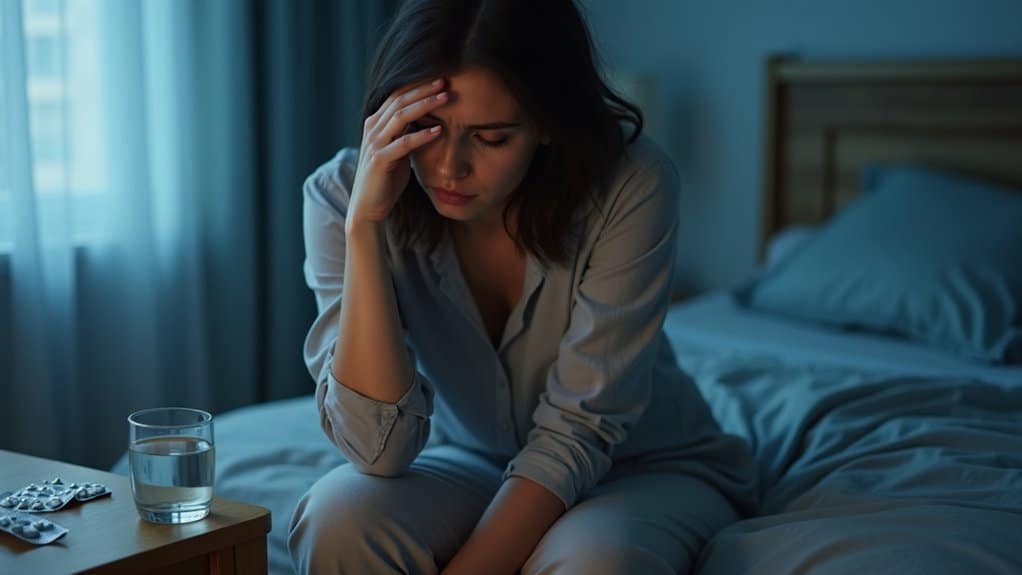
Alcohol causes next-day anxiety because your brain overcorrects as the drink wears off. While you’re drinking, alcohol boosts calming GABA signals and dampens glutamate. Once it clears, your nervous system rebounds toward heightened alertness, which experts call “mini-withdrawal.” You may feel restless, irritable, or uneasy without a clear reason. Fragmented sleep, lost REM, and dehydration make it harder to regulate your emotions. Knowing what drives this shift and who’s most vulnerable can help you respond.
Key Takeaways
- As alcohol clears, the brain overcorrects its calming GABA boost and glutamate suppression, triggering heightened arousal often called “mini-withdrawal.”
- Alcohol fragments sleep and disrupts REM, reducing the brain’s next-day capacity to regulate emotions and manage anxiety.
- Dehydration from suppressed vasopressin, plus inflammation from acetaldehyde, can cause fatigue, headache, and general malaise that worsen unease.
- People who are naturally shy, have higher baseline anxiety, or engage in repetitive negative thinking are more prone to hangover anxiety.
- Genetics, body composition, food intake, and hydration also influence how strongly someone experiences anxiety after drinking.
Why does alcohol cause anxiety the next day
Alcohol causes anxiety the next day because your nervous system rebounds toward heightened alertness as the alcohol wears off. While you drink, alcohol quiets your brain by boosting GABA’s calming effects and suppressing some glutamate activity. Once it leaves your system, your brain works overtime to recover, a response the National Institute on Alcohol Abuse and Alcoholism calls “mini-withdrawal.” That rebound can leave you restless, irritable, and on edge. Tips to ease next-day anxiety can make a significant difference in how you feel after a night of drinking. Practicing relaxation techniques, such as deep breathing or gentle yoga, can help calm your mind and body.
Sleep matters too. Alcohol fragments your sleep and disrupts REM, which helps regulate emotions. You wake fatigued, less equipped to manage worry. Dehydration, inflammation, and acetaldehyde add physical discomfort that compounds stress.
Next-day anxiety from alcohol comes from several factors combined, and it varies with genetics and baseline anxiety. Comparing alcohol types and anxiety helps explain how different drinks may affect mood, although the amount consumed often matters more than the type of alcohol.
How does alcohol disrupt brain chemistry
Alcohol disrupts brain chemistry by amplifying the effects of GABA, the brain’s main calming neurotransmitter, and suppressing some glutamate activity, which normally drives alertness and excitation. That’s why you may feel relaxed and less inhibited while drinking.
Alcohol boosts GABA, your brain’s calming messenger, and quiets glutamate, which is why drinking can leave you feeling relaxed and less inhibited.
As alcohol leaves your system, your brain works to restore its usual balance. This adjustment can overshoot, shifting your nervous system toward heightened arousal:
- Restlessness: You may feel physically on edge or unable to settle.
- Anxiety: Racing thoughts or unease can surface without a clear trigger.
- Irritability: Minor frustrations may suddenly feel harder to tolerate.
The National Institute on Alcohol Abuse and Alcoholism describes this next-day rebound as a “mini-withdrawal.” This rebound also explains why alcohol can cause anxiety: your brain is simply recalibrating, not failing you.
What is the alcohol rebound effect

The alcohol rebound effect is your nervous system’s overcorrection as your blood alcohol concentration drops back toward zero. Rather than simply returning to its baseline, your brain shifts toward heightened alertness and arousal. During drinking, alcohol amplified GABA’s calming signals and dampened glutamate activity. Your brain adapted to that sedation, so when alcohol leaves your system, it swings the other way.
The National Institute on Alcohol Abuse and Alcoholism describes this response as a “mini-withdrawal.” You may notice restlessness, irritability, a racing mind, or a sense of unease without a clear cause. Physical signs, such as sweating and increased blood pressure, can appear alongside these emotional effects.
This rebound helps explain why you can feel calm while drinking yet anxious the next morning. It isn’t a personal failing. It’s your brain working to restore balance.
How do blood sugar and dehydration contribute
Blood sugar and dehydration both add physical strain that can make next-day anxiety feel worse, though dehydration is the better-documented of the two. Blood sugar dips often get the blame, but fluid loss and inflammation have stronger evidence behind them:
- Dehydration: Alcohol suppresses vasopressin, a hormone that tells your kidneys to retain fluid, so you urinate more. Mild dehydration likely drives thirst, fatigue, and headache.
- Inflammation: Alcohol increases inflammation, which may fuel the general malaise you feel.
- Acetaldehyde: Your body breaks alcohol down into this short-lived toxic byproduct, which contributes to inflammation in several organs.
These symptoms don’t directly cause anxiety, but they often occur alongside it. When you feel drained and uncomfortable, it’s harder to manage worry. Food intake and hydration while drinking also influence how you feel the next day.
How does poor sleep worsen it

Poor sleep worsens anxiety after drinking because alcohol lowers the quality of your sleep and disrupts the rapid eye movement (REM) stage involved in emotional regulation. Alcohol might help you fall asleep faster, but your sleep tends to become fragmented, and you may wake up earlier than usual. When you lose REM sleep, you may start the next day with less capacity to regulate your emotions.
Poor-quality sleep also leaves you fatigued the next day, and fatigue makes anxiety harder to manage. Research suggests sleep loss can affect your mood the next day even if you notice few other hangover symptoms. If you wake up feeling anxious after drinking alcohol, disrupted sleep may be part of the reason, not a sign that something is wrong with you.
Who is more likely to wake up anxious
People who are naturally shy, have pre-existing anxiety, or tend toward repetitive negative thinking are more likely to wake up anxious after drinking. For some, anxiety is a regular part of a hangover. Others rarely experience it. Its intensity doesn’t track neatly with how much you drank. In a 2023 study of more than 5,000 students, 18.3% reported hangover anxiety. You may be more susceptible if: Alcohol’s impact on anxiety levels can vary significantly between individuals. Those who consume alcohol in moderation might not experience increased anxiety, while heavy drinkers often find that their symptoms worsen.
- You’re naturally shy: a 2019 study found the strongest next-day anxiety in participants who scored higher for shyness.
- You have pre-existing anxiety: a 2026 review of 22 studies linked higher baseline anxiety to worse emotional effects.
- You tend toward repetitive negative thinking, which can intensify distress, especially alongside avoidant coping.
Genetics, body composition, food intake, and hydration also play a role. If you’re affected, it’s not a personal failing. It reflects how your body and mind respond.
How does the body shift from calm to anxious
The body shifts from calm to anxious when your brain chemistry rebounds after alcohol wears off.
Alcohol boosts GABA’s calming effects and suppresses some glutamate activity, which lowers your alertness and inhibition. As alcohol wears off, your brain works to restore its usual balance, and your nervous system may tip toward heightened arousal. The National Institute on Alcohol Abuse and Alcoholism calls this a “mini-withdrawal.”
| Phase | What alcohol does | How you may feel |
|---|---|---|
| While drinking | Enhances GABA, dampens glutamate | Relaxed, less inhibited |
| As alcohol clears | Brain restores balance | Alert, restless |
| Next day | Nervous system overcorrects | Anxious, irritable |
This rebound can accompany fatigue, sweating, headache, and raised blood pressure. If you notice it, you’re experiencing a recognized physiological response, not a personal failing, and it often eases as your system rebalances.
How does Quest 2 Recovery address next-day anxiety
Quest 2 Recovery addresses next-day anxiety by helping you understand why it happens, recognize its patterns, and respond without reaching for another drink. When alcohol wears off, your nervous system rebounds toward heightened arousal, and disrupted REM sleep leaves you less equipped to regulate emotions.
When alcohol wears off, your nervous system rebounds toward anxiety. Understanding why helps you respond without reaching for another drink.
Our approach focuses on:
- Evaluating your baseline mental health, since pre-existing anxiety and repetitive negative thinking can intensify hangover distress
- Replacing avoidant coping with practical strategies that interrupt negative thought cycles
- Breaking the relief-drinking cycle, because using alcohol to ease anxiety can prolong it
If your anxiety feels persistent or severe, it deserves professional attention. You don’t have to manage it alone. We’ll work with you to understand your experience and build steadier mornings.
The Reason You Wake Up on Edge Isn’t a Character Flaw
That next-morning dread isn’t weakness. It’s your nervous system overcorrecting as alcohol clears, a rebound your brain can’t shortcut. When you drink again to quiet it, the cycle only stretches. Quest 2 Recovery offers dual diagnosis treatment that helps you break the relief-drinking loop and steady your mornings without alcohol. Verify your insurance or call (855) 783-7888 for a confidential conversation about recovery.
Frequently Asked Questions
How Long Does Hangover Anxiety Usually Last After a Night of Drinking?
Hangover anxiety usually peaks the next day and fades as your body recovers. If you’re hangover-sensitive, you may notice symptoms easing gradually but lingering into the afternoon. It can last longer if you drink more to relieve it, which prolongs the cycle. Poor sleep, baseline anxiety, and repetitive negative thinking can intensify it. If your anxiety persists or feels severe, it’s worth talking with a health professional. You’re not alone.
Does Drinking More Alcohol the Next Day Make Hangover Anxiety Worse?
It can. Drinking more might briefly ease your anxiety, but you’re likely prolonging it. When alcohol wears off, your brain rebounds toward heightened arousal, a “mini-withdrawal” that fuels restlessness and worry. Adding more alcohol delays that recovery, so anxiety can last longer. Fragmented sleep and avoidant coping can intensify it too. Instead, rest, hydrate, and eat well. If anxiety feels persistent or severe, you deserve support from a health professional.
How Common Is Anxiety During a Hangover?
Hangover anxiety is fairly common, though you won’t necessarily experience it. In a 2023 study of more than 5,000 UK and Dutch students, 18.3% reported anxiety while hungover. A 2026 review of 22 studies linked hangovers to increased anxiety, stress, and depression. If you’re shy, already anxious, or prone to repetitive negative thinking, you may feel it even more intensely. If it persists, it’s worth talking with a health professional.
Can Eating or Drinking Water Before Drinking Prevent Next-Day Anxiety?
Not reliably. Eating and staying hydrated may help, but they won’t guarantee you’ll avoid next-day anxiety. Food intake and hydration are among several factors that can shape how you feel, alongside genetics, body composition, personality, and baseline mental health. Water can ease dehydration-related thirst, fatigue, and headache, yet it doesn’t stop your brain’s rebound arousal or alcohol’s disruption of REM sleep. Drinking less remains your single most dependable form of protection.
When Should Hangover Anxiety Be Discussed With a Health Professional?
You should talk with a health professional if your anxiety feels severe or persists beyond the usual next-day window. For most people, it peaks the day after drinking and gradually eases. If you’re drinking more to calm it, you may extend it. You’ll benefit from support if you already live with anxiety or repetitive negative thinking, since research links these with worse hangover-related distress. Reaching out is a sensible step.