




Your legs hurt after drinking because alcohol acts as a diuretic, lowering your total body water and dragging out electrolytes like potassium and magnesium. That imbalance disrupts muscle contraction and nerve signaling, triggering cramps and aching. Alcohol also widens your blood vessels, raising vein pressure and pooling blood in your lower limbs, which adds heaviness and swelling. Prolonged standing or walking makes it worse. Understanding each mechanism helps you pinpoint what’s driving your discomfort.
Key Takeaways
- Alcohol acts as a diuretic, causing dehydration and loss of electrolytes like potassium and magnesium, which triggers muscle cramps and fatigue.
- Alcohol widens blood vessels, promoting blood pooling in the legs that causes heaviness and swelling in the lower limbs.
- Prolonged walking or standing after drinking worsens leg pain by compounding fluid and electrolyte deficits needed for muscle function.
- Repeated heavy drinking can cause alcohol-related neuropathy, producing burning pain, tingling, numbness, or weakness starting in the lower legs and feet.
- One-sided leg pain or swelling may signal deep vein thrombosis, and persistent pain beyond 48 hours warrants medical evaluation.
Why Do Your Legs Hurt After Drinking Alcohol
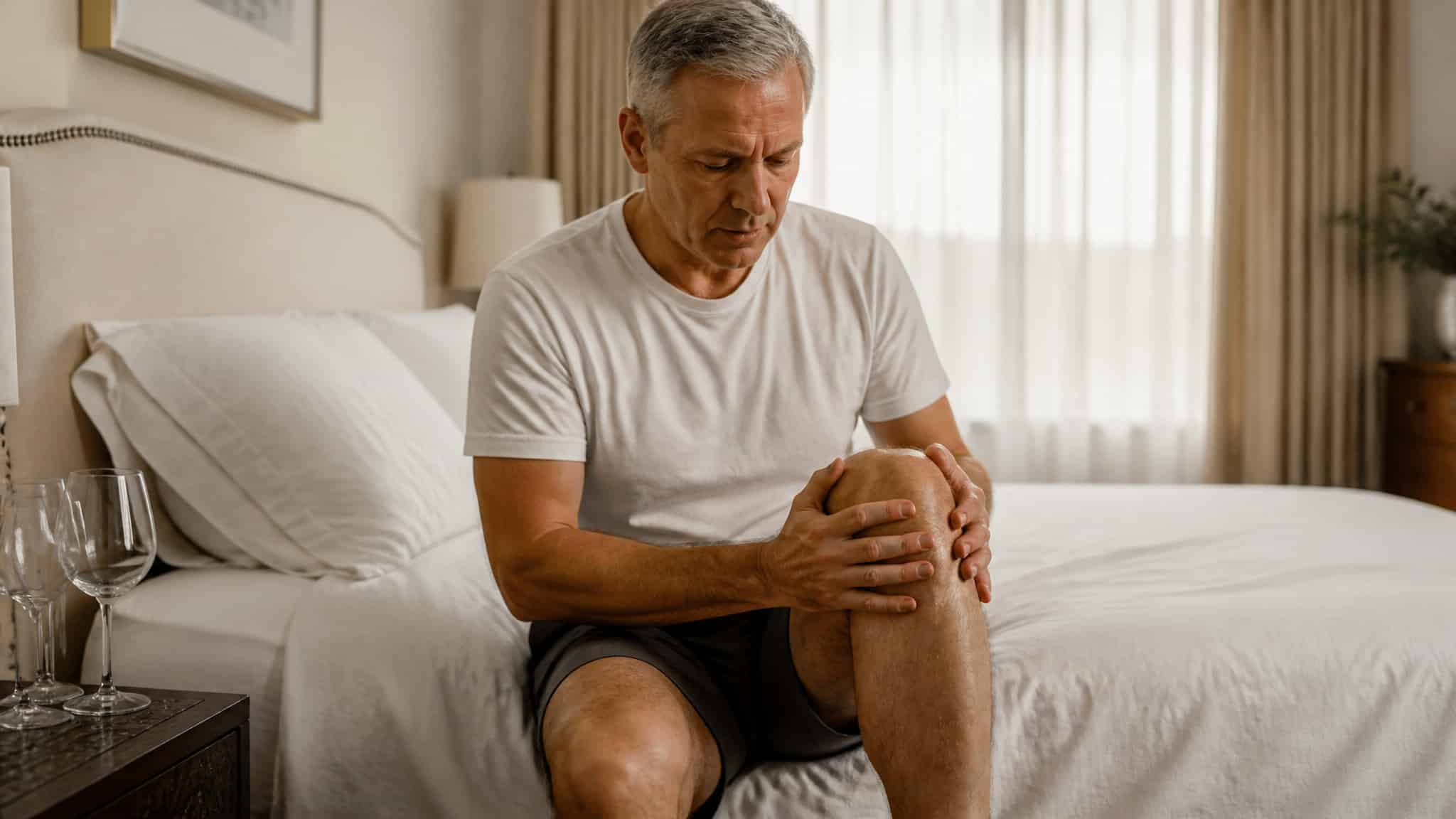
Your legs hurt after drinking alcohol because several mechanisms are at work. Alcohol acts as a diuretic, increasing urine output and lowering total body water, which leaves your leg muscles tight, crampy, and sore. If you’re wondering “why do my legs hurt after drinking,” dehydration is often the starting point. Alcohol also depletes electrolytes like potassium and magnesium, disrupting muscle contraction and nerve signaling, which triggers cramps and aching. As a vasodilator, it widens blood vessels, raising vein pressure and promoting blood pooling that makes your legs feel heavy. Inflammatory responses to ethanol and its byproducts stress muscle tissue, delaying recovery. A sore legs hangover typically resolves within 24, 48 hours, so if your legs hurt hangover-style, rehydration and rest usually help. Body aches and tenderness can also arise from the combination of dehydration and alcohol-related inflammation. These symptoms may be exacerbated by insufficient rest following a night of drinking.
How Can Dehydration or Muscle Cramping Contribute to Leg Pain After Drinking
Dehydration sets the stage for leg pain after drinking by acting as a diuretic, increasing urine output and lowering your total body water. As fluid drops, your blood volume falls, reducing circulation to leg muscles and contributing to fatigue and heaviness. Dehydration also disrupts normal muscle function and slows recovery after activity, leaving your legs feeling tight, crampy, or sore.
Fluid loss often drags electrolytes along with it. When potassium and magnesium drop, muscle contraction and nerve signaling misfire, triggering cramps, spasms, and aching. Severe imbalances can add weakness or shakiness to the pain.
You’ll usually notice improvement after you rehydrate and rest, with symptoms resolving within 24, 48 hours. Replacing fluids with electrolyte-containing drinks helps restore balance and eases cramping faster.
How Can Prolonged Walking Standing or Other Activity Add to Sore Legs
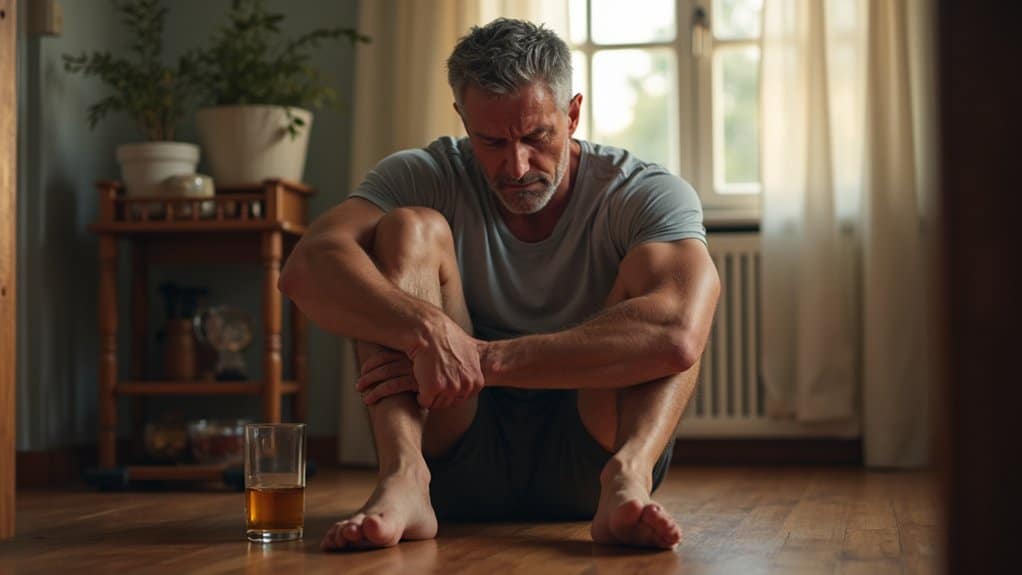
Prolonged walking, standing, or other activity compounds the fluid and electrolyte deficits already working against your legs. When you walk or stand for long stretches after drinking, your muscles demand more water and minerals that alcohol has already depleted. Contracting muscles rely on potassium and magnesium for proper signaling, so working them while these stores run low increases your risk of cramps and aching. Prolonged standing also raises venous pressure, and since alcohol dilates your blood vessels, blood pools more readily in your lower legs. That pooling adds heaviness and swelling on top of exercise-induced soreness. Activity generates metabolic byproducts your dehydrated system clears more slowly, prolonging discomfort. You’ll likely notice stronger pain and stiffness when physical exertion and alcohol’s effects overlap, delaying your recovery further.
Can Repeated Heavy Drinking Contribute to Nerve-Related Leg Symptoms
Yes, repeated heavy drinking can damage the peripheral nerves that supply your legs, a condition known as alcohol-related neuropathy. This nerve damage typically starts in your lower legs and feet, since the longest nerves are most vulnerable. You’ll often notice burning pain, tingling, numbness, or weakness that persists beyond a hangover. Ethanol and its metabolites directly injure nerve fibers, while poor nutrition compounds the damage. Deficiencies in B vitamins, particularly thiamine, impair nerve function and accelerate degeneration. As the neuropathy progresses, you may lose sensation or develop muscle weakness that affects walking. Because untreated nerve damage can worsen over time, you shouldn’t dismiss ongoing symptoms. Seek medical evaluation so a clinician can assess nerve function, address nutritional gaps, and prevent further deterioration.
How Does Leg Pain During Drinking the Next Morning and Several Days Later Differ
Leg pain during drinking and several days later differs by mechanism and symptoms. Pain while you’re drinking often reflects vasodilation and blood pooling in your leg veins. The next morning, dehydration and electrolyte depletion dominate, producing cramps, tightness, and heaviness. Several days later, persistent pain points toward inflammation, muscle tissue stress, or emerging nerve involvement. Muscle discomfort after alcohol can exacerbate the overall feeling of heaviness in the legs. This discomfort may also lead to difficulty in walking or performing daily tasks.
| Timing | Primary Mechanism | Typical Symptoms |
|---|---|---|
| During drinking | Vasodilation, vein pressure | Aching, heaviness, swelling |
| Next morning | Dehydration, low electrolytes | Cramps, tightness, soreness |
| Several days | Inflammation, muscle stress | Lingering ache, stiffness |
| Weeks or more | Nerve or muscle damage | Burning, weakness, numbness |
Watch how long symptoms last. Rehydration resolves early pain quickly, but prolonged or worsening symptoms signal deeper tissue or nerve involvement requiring evaluation.
Why Is One-Sided Leg Pain or Swelling Different From Typical Hangover Soreness
One-sided leg pain or swelling differs from typical hangover soreness because it points to a localized cause rather than a systemic one. Typical hangover soreness stems from systemic effects like dehydration, electrolyte loss, and inflammation, so it usually affects both legs symmetrically. When you notice pain or swelling in just one leg, the mechanism is different. Systemic processes act throughout your body, so they don’t target a single limb. One-sided symptoms point instead to a localized cause, such as a blood clot in a deep vein. Alcohol’s diuretic effect and prolonged immobility after drinking can slow blood flow and raise clotting risk. If you feel warmth, redness, tightness, or swelling isolated to one calf or thigh, don’t attribute it to a hangover. This pattern warrants prompt medical evaluation, because an untreated deep vein thrombosis can dislodge and travel to your lungs, becoming life-threatening.
When Should Persistent Leg Pain After Drinking Be Medically Evaluated
Persistent leg pain after drinking should be medically evaluated when it lasts beyond 48 hours despite rehydration and rest, since normal hangover-related pain resolves once alcohol clears your system. Seek care when you notice burning, tingling, or numbness that starts in your lower legs, because these suggest alcohol-related peripheral neuropathy that can progress without treatment. Dark urine paired with severe pain and weakness points toward alcoholic myopathy and muscle breakdown, which requires prompt assessment. Persistent swelling, visible veins, or repeated aching may reflect venous insufficiency or peripheral artery disease. If your legs weaken, waste visibly, or pain worsens with each drinking episode, don’t ignore it, get evaluated. Body aches after drinking alcohol can signal dehydration or inflammation. Monitor how your body responds, as persistent discomfort could point to underlying health issues.
When Leg Pain After Drinking Becomes a Warning Sign
Burning, tingling, or numbness that starts in your legs, or aching that worsens with every drinking episode, can point to alcohol-related nerve damage rather than a passing hangover. Quest 2 Recovery provides medically supervised detox and inpatient care that helps you step away from alcohol safely and address the root cause. Verify your insurance or call (855) 783-7888 today for a confidential conversation about getting support.
Frequently Asked Questions
Does the Type of Alcohol Affect Leg Pain Differently?
The type matters less than the total amount of ethanol you consume. Any alcoholic drink triggers the same core mechanisms, diuresis, electrolyte depletion, vasodilation, and inflammation, so your legs ache regardless of source. However, higher-proof drinks deliver more ethanol per serving, intensifying dehydration and muscle stress. Sugary or congener-heavy options like red wine or dark liquors may worsen inflammation and hangover severity, indirectly amplifying the soreness and heaviness you’ll feel.
Can Drinking Water Before Bed Prevent Leg Pain?
Drinking water before bed can help, but it won’t fully prevent leg pain. Since alcohol acts as a diuretic, you’re losing fluid and electrolytes, which contributes to cramping and aching. Rehydrating counteracts some of that fluid loss and supports muscle function. However, water alone won’t replace depleted potassium or magnesium, and it won’t reverse inflammation or vessel changes. You’ll get better results pairing fluids with electrolytes and limiting how much you drink.
Are Certain People More Prone to Leg Pain After Drinking?
Yes, you’re more prone if you’re chronically dehydrated, have low potassium or magnesium, or already have venous insufficiency or peripheral artery disease. Heavy or long-term drinking raises your risk through nerve damage and alcoholic myopathy. Poor nutrition worsens nerve injury, so you’ll feel more pain if your diet’s inadequate. If you sit or stand for long periods, blood pools in your leg veins, intensifying your aching and swelling.
Do Painkillers Safely Relieve Alcohol-Related Leg Discomfort?
You should use painkillers cautiously. Avoid acetaminophen near alcohol, since combining them stresses your liver and raises toxicity risk. NSAIDs like ibuprofen can irritate your stomach lining and increase bleeding risk when alcohol’s in your system. If you’re dehydrated, NSAIDs may also strain your kidneys. It’s safer to rehydrate, replace electrolytes, and rest first. If pain persists or worsens, get medical evaluation rather than masking symptoms with medication.
Can Regular Exercise Reduce Leg Pain From Drinking?
Regular exercise can help, but it won’t fully counteract alcohol’s effects. You’ll improve circulation, which reduces blood pooling and venous pressure in your legs. Stronger muscles recover better from ethanol-related stress and soreness. Movement also supports fluid balance and nerve health. However, if you’re dehydrated or electrolyte-depleted from drinking, exercise can worsen cramps. You’ll get the most benefit by hydrating, replacing electrolytes, and resting before working out, not immediately after heavy drinking.