



Your muscles hurt after drinking because alcohol acts as a diuretic, pulling fluid from muscle tissue and leaving you dehydrated. This reduces circulation, limiting oxygen and nutrient delivery while triggering cramps. Alcohol also disrupts key electrolytes like sodium, potassium, and magnesium, impairing muscle contraction. Meanwhile, your liver converts alcohol into acetaldehyde, a toxic byproduct that stresses tissues and sparks inflammation. Poor sleep slows recovery too. Understanding each factor reveals how you can feel better faster.
Key Takeaways
- Alcohol’s diuretic effect causes dehydration, reducing muscle circulation and limiting oxygen and nutrient delivery, which amplifies aches.
- Electrolyte imbalances in sodium, potassium, and magnesium trigger cramping and impair proper muscle contraction and relaxation.
- Alcohol metabolism produces acetaldehyde, which stresses tissues and promotes inflammation, contributing to generalized aches and tenderness.
- Poor sleep and impaired protein synthesis slow muscle repair, prolonging soreness and delaying overall recovery.
- Exercising while drinking stacks stress on muscles, deepening fluid loss and raising injury risk, including rhabdomyolysis.
Why Do Your Muscles Hurt After Drinking Alcohol
Sore muscles after drinking usually trace back to several overlapping physiological effects. Alcohol acts as a diuretic, increasing urination and leaving your muscle tissue underhydrated, which reduces circulation and intensifies aches. It also disrupts sodium, potassium, and magnesium balance, and low electrolytes can trigger cramping and impair normal muscle contraction. When your muscles hurt after drinking, inflammation plays a role too. Alcohol metabolizes into acetaldehyde, a toxic compound linked to tissue stress and oxidative damage. Poor sleep and impaired protein synthesis slow recovery, so muscle soreness after drinking often lingers. In heavier cases, alcohol can directly injure muscle fibers, causing pain, tenderness, and weakness that deserve closer attention.
How Can Dehydration Affect Muscle Comfort After Drinking
Dehydration makes your muscles ache after a night of drinking because alcohol acts as a diuretic, increasing urination and leaving your muscle tissue underhydrated. When fluid levels drop, circulation to your muscles decreases, and that reduced blood flow makes existing aches feel worse. Dehydration also sets the stage for cramping, which explains why your legs or back might seize up the morning after. Sore legs after drinking can also be attributed to overexertion during social activities associated with alcohol consumption.
Here’s how dehydration undermines muscle comfort:
- It pulls fluid from muscle tissue, leaving fibers underhydrated and stiff.
- It reduces circulation, limiting oxygen and nutrient delivery to muscles.
- It triggers cramping, a common complaint after heavy drinking.
- It overlaps with fatigue, amplifying stiffness and discomfort.
Rehydrating with water and electrolytes helps restore normal muscle function and speeds recovery.
How Can Alcohol-Related Inflammation Contribute to Muscle Soreness

Alcohol-related inflammation contributes to muscle soreness through the way your body processes alcohol, creating its own source of muscle discomfort. When you drink, your liver metabolizes alcohol into acetaldehyde, a toxic compound that stresses tissues throughout your body. This byproduct triggers inflammatory responses that can amplify generalized aches and make your muscles feel tender. Joint pain after drinking can occur as a result of increased inflammation in the body. This added stress can lead to a heightened sensitivity to pain, particularly in the joints.
Alcohol also promotes oxidative stress, adding another layer of strain that contributes directly to muscle discomfort. These inflammatory processes are frequently cited as part of the broader hangover symptom cluster, which is why you often wake up feeling sore even without intense exercise.
If you’ve exerted your muscles at all, this inflammation impairs recovery and magnifies existing soreness. So even minor physical activity can leave you aching longer after drinking. Pain to touch after drinking can make even simple movements feel unbearable. Many people don’t realize how much dehydration and inflammation affect their bodies until they feel this discomfort.
How Do Muscle Soreness Cramps Weakness and Tenderness Differ
Muscle soreness, cramps, weakness, and tenderness each point to a distinct physiological process, from fluid loss to direct tissue damage. Understanding how these four symptoms differ helps you identify what’s actually happening in your muscles after drinking.
| Symptom | What You Feel | Likely Cause |
|---|---|---|
| Soreness | Dull, generalized ache | Inflammation, poor recovery |
| Cramps | Sudden, involuntary contraction | Electrolyte imbalance, dehydration |
| Weakness | Reduced force, proximal fatigue | Alcoholic myopathy, low potassium |
| Tenderness | Pain when you touch the muscle | Muscle injury, swelling |
Soreness is usually diffuse and worsens with movement. Cramps strike abruptly and resolve quickly. Weakness affects your ability to generate force, often near the body’s midline. Tenderness signals localized injury or inflammation. Distinguishing these helps you recognize when soreness signals something more serious.
How Can Exercise Walking or Other Physical Activity While Drinking Add to Muscle Pain
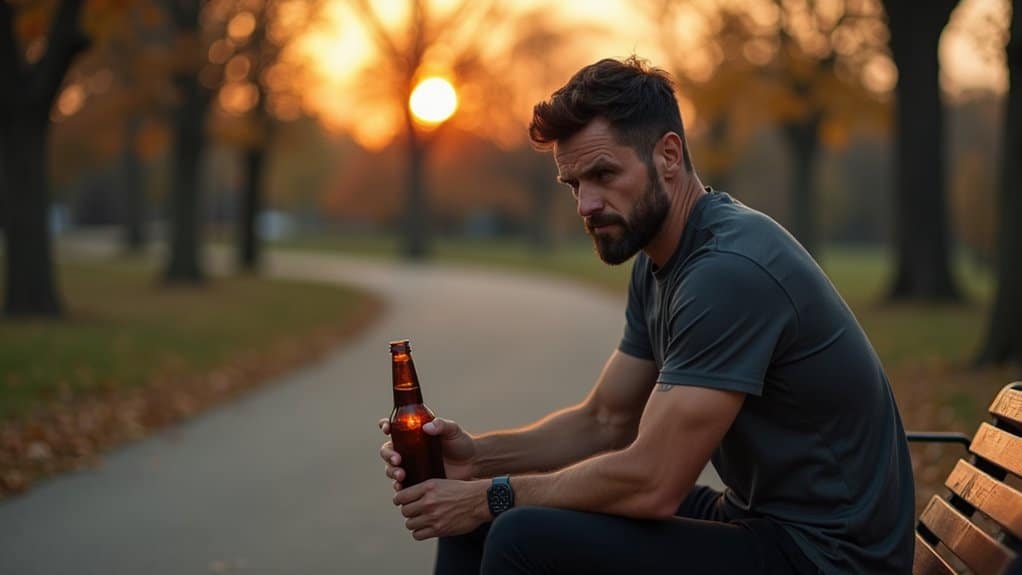
Exercise walking or other physical activity while drinking adds to muscle pain by stacking two separate stressors onto the same muscle tissue. Physical activity creates microtrauma that normally triggers repair, but alcohol interferes with that recovery process, leaving your muscles sore longer.
Drinking while you exercise doubles the strain on your muscles, microtrauma builds up while alcohol blocks the repair your body needs.
- Impaired protein synthesis: Alcohol reduces the muscle repair response you need after exertion, delaying recovery.
- Compounded dehydration: Sweating during activity plus alcohol’s diuretic effect deepens fluid loss, worsening cramps and stiffness.
- Electrolyte depletion: Exercise and drinking both drain sodium, potassium, and magnesium, disrupting normal contraction and relaxation.
- Elevated injury risk: Combining exertion with alcohol raises your chance of strains and, in severe cases, rhabdomyolysis.
If you’re walking or training after drinking, expect amplified soreness and slower recovery.
When Can Repeated Heavy Drinking Contribute to More Persistent Muscle Problems
Repeated heavy drinking contributes to more persistent muscle problems when it becomes chronic and damage no longer fully resolves between episodes. When you drink heavily over time, you increase your risk of recurring muscle damage that doesn’t fully resolve between episodes. Chronic alcohol exposure impairs protein synthesis and disrupts your body’s repair processes, so muscles struggle to rebuild. This can progress to alcoholic myopathy, which often affects proximal muscles near your midline and produces persistent weakness, tenderness, and swelling. If soreness lingers longer than you’d expect, that persistence may reflect ongoing muscle injury rather than a passing hangover. Repeated bouts of dehydration and electrolyte imbalance compound the harm, further impairing normal contraction and relaxation. Over time, your muscle function declines, and recovery becomes slower and less complete.
When Does Severe Muscle Pain or Weakness Need Medical Evaluation
Severe muscle pain or weakness needs medical evaluation when it moves beyond ordinary post-drinking soreness and shows signs of tissue breakdown. When alcohol triggers rhabdomyolysis, muscle fibers break down and release proteins that can damage your kidneys. Recognizing the warning signs early helps you avoid serious complications like acute kidney injury.
When alcohol-related muscle breakdown releases proteins into your bloodstream, your kidneys bear the burden, early recognition prevents serious complications.
Seek medical attention if you notice any of the following after drinking:
- Dark, tea-colored urine, which often indicates muscle breakdown and myoglobin release.
- Severe weakness or inability to move a muscle group, suggesting significant tissue injury.
- Rapid-onset pain and swelling following a binge, especially near the body’s midline.
- Persistent soreness lasting longer than expected, which may reflect alcoholic myopathy.
Elevated muscle enzymes confirm these conditions, so don’t delay evaluation.
When Sore Muscles Signal Ongoing Alcohol-Related Harm
Muscle soreness that lingers, along with weakness, tenderness, or dark urine after drinking, can reflect repeated alcohol-related damage rather than a simple hangover. Quest 2 Recovery provides medically supervised detox and inpatient care that helps you step away from alcohol safely and give your body the chance to recover. Verify your insurance or call (855) 783-7888 today for a confidential conversation about getting the support you need.
Frequently Asked Questions
Does the Type of Alcohol Affect Muscle Soreness Differently?
The type doesn’t matter as much as the total alcohol you consume. Your muscle soreness stems from alcohol’s core effects, dehydration, electrolyte disruption, inflammation, and toxic byproducts like acetaldehyde, regardless of whether you drink beer, wine, or spirits. What drives your discomfort is how much ethanol you take in and how quickly. Higher-proof drinks can worsen dehydration if you’re not pacing yourself, but the underlying mechanisms stay the same.
How Long Should I Wait Before Exercising After Drinking?
You should wait until you’re fully rehydrated and sober, typically 24 hours after moderate drinking. Alcohol impairs muscle repair, disrupts electrolytes, and leaves tissue underhydrated, so exercising too soon can worsen soreness and cramping. After heavy drinking, give yourself longer and prioritize water, electrolytes, and sleep first. If you’re experiencing dark urine, severe weakness, or significant swelling, don’t exercise, these signal muscle breakdown and need medical attention promptly.
Can Certain Medications Worsen Muscle Pain When Combined With Alcohol?
Yes, certain medications can worsen muscle pain when you combine them with alcohol. Statins, for example, carry a known risk of muscle breakdown, and drinking can amplify that stress on your muscle tissue. Some medications also increase dehydration or electrolyte disruption, which intensifies cramping and soreness. Combining alcohol with drugs that strain your kidneys or liver may further impair recovery. If you’re on prescriptions, check with your provider before drinking.
Do Age or Fitness Level Influence Alcohol-Related Muscle Soreness?
Yes, both can shape how sore you feel. As you age, you rehydrate more slowly and clear alcohol less efficiently, so dehydration and inflammation hit harder. Lower muscle mass and reduced protein synthesis can also slow recovery. If you’re less fit, minor exertion strains your muscles more, and alcohol’s impaired repair compounds that soreness. Staying hydrated, replacing electrolytes, and prioritizing sleep help offset these age- and fitness-related vulnerabilities.
Are There Specific Foods That Help Prevent Muscle Pain After Drinking?
You can target foods that restore electrolytes and support recovery. Eat potassium-rich options like bananas and potatoes, and magnesium sources like leafy greens, nuts, and seeds. Add sodium through broths to replace losses. Prioritize protein, eggs, fish, or lean meat, to support muscle repair and protein synthesis. Include water-rich fruits to aid rehydration. While these won’t eliminate alcohol’s effects, they help correct the imbalances and inflammation that make your muscles ache.